A Brief Analysis Of Composite Materials Used As Concrete Reinforcement

A-Brief-Analysis-Of-Composite-Materials-Used-As-Concrete-Reinforcement

Reliability, durability, and safety are of colossal significance when it comes to the design and construction of concrete infrastructure. It is absolutely crucial to reduce the traditional defects of reinforced concrete in order to build structures that can achieve long service life. Fiber reinforced polymer (FRP) reinforcement has turned out to be a remarkable construction material that can increase the strength parameters of reinforced concrete. This blog post will provide a brief introduction to FRP composite materials used as reinforcement in concrete structures.

Over the past couple of decades, FRP composites have developed into a structurally and economically viable construction solution for bridges, marine structures, and buildings. They are manufactured in a variety of forms with varying properties and manufacturing processes. Typical FRP composite materials used in civil engineering are consisted of glass, carbon, and aramid. These materials are either supplied as a ready-to-use material, such as rebar, or they are provided in individual constituent forms, such as fiber and polymer resin.

The incredible performance of composite materials as concrete reinforcement makes it an attractive alternative to conventional reinforcement materials. The applicability of fiber reinforced polymer bars to civil structures as a substitute for steel tendons and bars has been thoroughly researched and analyzed. A large number of studies regarding the structural feasibility and in-practice performance of advanced composite materials are available. Corrosion resistance, high tensile strength, and ease of installation are some of the prominent features of FRP bars that can help build sustainable concrete structures.

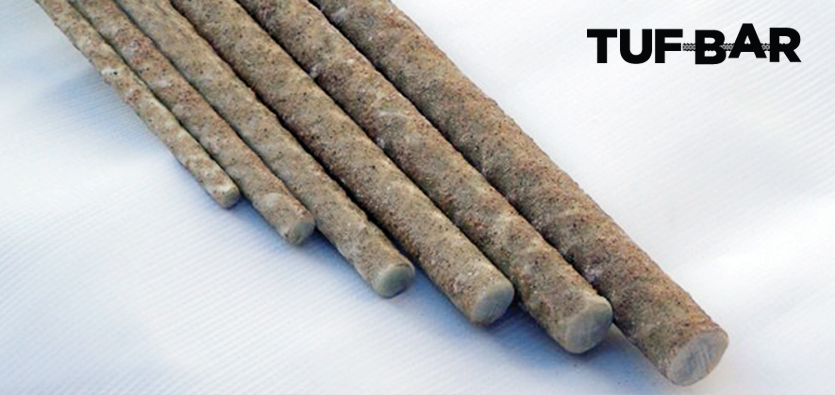
In order to obtain the optimum combination of material properties, the quality of constituent materials and the manufacturing process need to be maintained at a higher level. For instance, the physical and mechanical properties of the matrix can have a great impact on the final mechanical properties of bars. Pultrusion is a common manufacturing process that is employed to produce continuous lengths of FRP bars. The surface of the composite bars is coated with a thin layer of sand in order to facilitate an excellent bond between concrete and bars.

Glass fiber reinforced polymer (GFRP), one of the variants of FRP, is a competitive concrete reinforcement option in concrete members subjected to severe environmental conditions. Being a corrosion resistant and electromagnetically transparent construction material, GFRP reinforcement is a promising material for structures that operate in marine and sensitive environments. Following are some of the ideal applications of GFRP rebar:

  • Structures built in potentially corrosive environments: bridge decks, retaining walls, public transport infrastructure, roads, etc.
  • Structures built near the sea water: piles, decks, pools, floating structures, boat ramps, seawalls, building, etc.
  • Structures exposed to severe corrosive agents: power plants, water treatment plants, cooling towers, airport runways, etc.
  • Applications that demands electromagnetic neutrality: MRI units, telecommunication facilities, research facilities, military structures, etc.
  • Temporary concrete structures: mining, tunneling, boring, etc.

Following the extensive research, design codes, and the availability of in-practice data, civil engineers are increasingly showing confidence in GFRP reinforcement products. FRP composites, undoubtedly, are the construction material of the 21st Century.

The Application of FRP Composites in Bridge Structures

bridge

Introduction

The need for innovative construction techniques and sustainable construction materials have completely reshaped the construction industry. Following the need for high-performance and environmentally-protected construction materials, FRP composites have gained gradual but wide acceptance from civil engineers around the world. Properties like high tensile strength, ease of installation, low maintenance cost, and resistance against harsh environmental conditions give FRP composites a clear advantage over traditional construction materials. The application of fiber reinforced polymer in civil construction ranges from rehabilitation of existing reinforced concrete (RC) to building new projects. This blog post will talk about the application of FRP composites in bridge infrastructure.

What are FRP composites?

Fiber and matrix are two major ingredients that are used to develop FRP construction materials. The properties of these modern construction materials are largely determined by the quality and ratio of its constituents and manufacturing process. The function of fiber is to provide stiffness and strength while matrix is responsible for providing FRP composites with environmental protection and rigidity.

The application of FRP composites in bridge structures

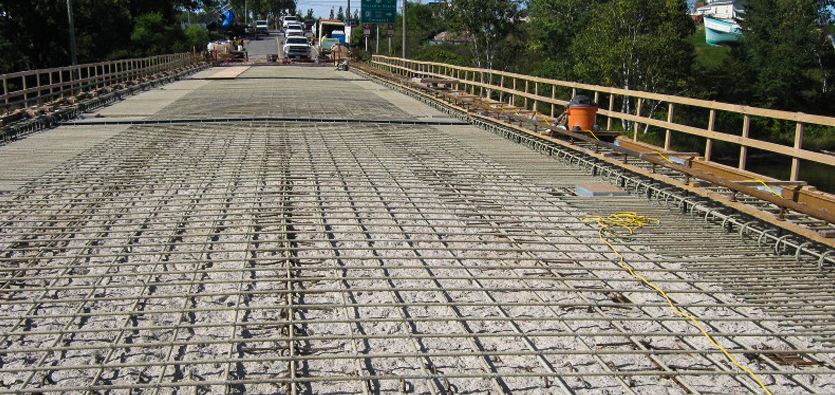
As a result of extensive research investigating the applicability of FRP composites in the bridge construction, advanced composite materials, especially GFRP rebar, is now being increasingly used to construct the new bridges and strengthen the existing structurally deficient bridge structures in North America. Why should traditional materials be replaced with FRP composites?

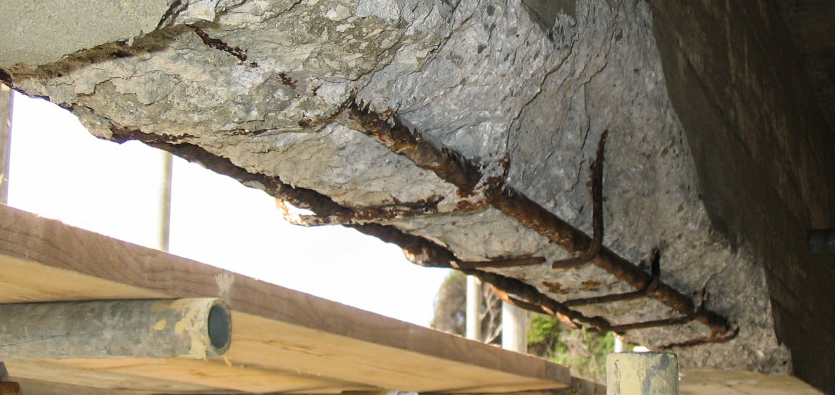
Concrete provides a solid cover for steel reinforcement, however, despite the cover, severe environmental conditions can cause the formation of hydrated ferrous oxide that can lead to the deterioration of concrete members. FRP composites provide complete protection against the environment and concrete degradation and this is exactly why the focus of civil engineers have shifted from steel to fiberglass bars over the past few years. It is in the interest of a country to build bridges that can offer an exceptionally long service life with very low maintenance cost.

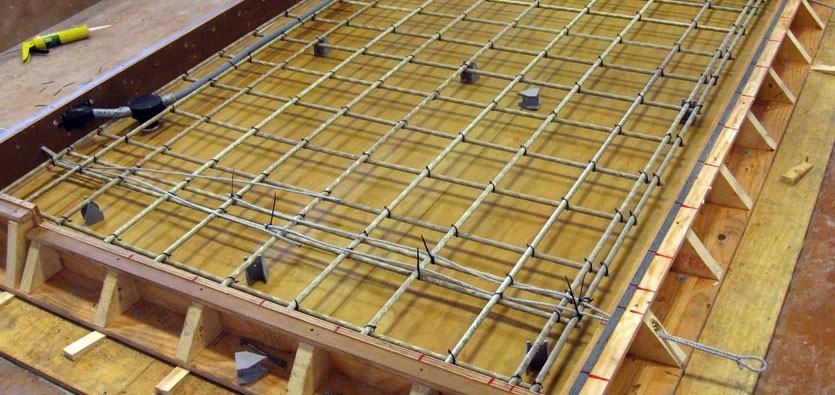
Since FRP composites are corrosion resistance, they can be used to replace steel reinforcement in the forms of rebar for shear and flexural reinforcements, and tendon for pre-stressing or post-tensioning. FRP rebar and tendon can be manufactured in multidimensional or one-dimensional forms depending on the nature of application.

bridge-structure

Rehabilitation of existing bridge structures

Fiber reinforced polymers was first introduced to civil engineering as a replacement of steel materials to strengthen and retrofit existing bridge structures using externally bonded FRP composites. In the strengthening and retrofitting application of FRP composites, sheets and strips are employed to increase the efficiency and strength of an underperforming or deteriorated bridge. These techniques have been used for improving both shear and flexural capacity of concrete members.

So far as seismic retrofitting of reinforced concrete is concerned, FRP composites can be used in the form of wrapped column. Traffic disruption is the biggest hurdle that engineers face while carrying out seismic retrofitting of bridges. One of the advantages of fiberglass rehabilitation material is that they are easy and quick to install without disrupting the flow of traffic.

The use of these corrosion-free and modern construction materials can save governments billion of dollars annually and can help build a sustainable bridge infrastructure.

The Application of FRP Composites in Highway Infrastructure

The-Application-of-FRP-Composites-in-Highway-Infrastructure

The advanced composite materials have demonstrated great potential in civil applications, especially in the highway infrastructure. Fiber reinforced polymer (FRP) construction materials are lightweight, easy to install, and offer high strength-to-weight ratio with durability. These materials can be customized in accordance with the required properties: size, strength, stiffness, and overall structure.

The deterioration of highway infrastructure is not new, however, a pressing issue. There are a number of factors that damage the integrity of highways and bridges, for instance, the use of substandard concrete reinforcement, heavy loads, short-term maintenance practices, rebar corrosion, and severe environment. The conventional materials such as steel bars cannot withstand the severe environment exposure and high traffic volumes and the concrete deterioration simply becomes unavoidable.

The current highway infrastructure in the United States and across North America is facing a growing deterioration problem, costing governments billions of dollars in rehabilitation cost. Taking into account the need for more sustainable construction materials, the significance of FRP construction materials rises sharply since FRP is the ideal material for the rehabilitation of degraded and underperforming concrete infrastructure. Fiberglass composites enhance the strength and performance of the existing highway infrastructure situated in the harsh environment that could be the top reason why the original structures deteriorated.

Despite the promising properties and in-practice results, the construction industry is still not fully utilizing the power of FRP in rehabilitating the degraded reinforced concrete. However, this exceptional material is all set to dominate the rebar market in future. The availability of adequate in-practice data and design codes have already encouraged a large portion of the civil engineering community to employ composite materials for rehabilitation and new applications. Here are some of the factors that undermine the real potential of FRP construction products for highway infrastructure in the past:

  • Inadequate knowledge of FRP composites
  • Lack of bridge-specific material specification
  • No dependable rehabilitation procedures
  • Lack of encouragement from governments

An extensive research intending to develop a precise and strategic plan for providing a comprehensive guide on the application of FRP materials in the highway infrastructure is still in process. Following are some of the advantages of using FRP in building/rehabilitating highways and other concrete infrastructures:

  • High strength-to-weight ratio
  • Excellent fatigue resistance
  • Corrosion-resistance
  • Reduced overall cycle-costs
  • Ease of installation
  • Time-effective repair and construction process

The-Application-of-FRP-Composites

Because FRP composites are lightweight, the reduced deck dead loads enable a bridge to carry increased live loads. Similarly, the environmental durability of FRPs allows bridges to remain corrosion-free and in good shape for a long period of time. One of the most prominent qualities of composite or fiberglass bars is that they do not corrode and successfully resist all the corrosive agents present in an environment, and this is what we need today to build sustainable concrete infrastructure that can offer significant savings in costs for both the governments and taxpayers.

The widespread application of fiberglass rebar and other FRP composite materials can help eliminate the deterioration problems in highways and other concrete structures. As mentioned earlier, FRP composites can be fabricated with the desired structural properties by making a considerate selection of fibers and resins and using appropriate manufacturing techniques. North America is the largest producer and consumer of fiberglass rebar. TUF-BAR, a leading GFRP fiberglass rebar manufacturer in North America, manufactures the highest-quality composite materials for highways and other civil applications. It is time to replace conventional construction materials with the FRP composites so that durable concrete structures can be built.

Techniques to Control Concrete Degradation

Concrete-Degradation

Concrete structures deteriorate when the environmental loading on a structure exceeds the ability of a structure to resist the environmental loading. Corrosion can be prevented by either enhancing the ability of a structure to resist environment or by mitigating the intensity of environment. Corrosion is not solely associated with the environment as there are other factors such as fatigue, expensive reaction, freeze-thaw cycles, which can cause corrosion. In fact, there are a number of conditions that can seriously damage the integrity of concrete structures.

The corrosion-induced deterioration leads to cracking which makes it easy for water and other elements to penetrate and make a contact with the reinforcing bars. Steel reinforcing bars, unfortunately, do not provide protection against corrosive agents and concrete becomes vulnerable to deterioration. There is a combination of factors such as temperature, the resistivity of concrete, chlorides, humidity etc. that influence the corrosion of steel reinforcing bars. Corrosion can be controlled by controlling these factors.

Techniques-to-Control-Concrete-Degradation

One of the traditional ways to protect the reinforced concrete is to coat the steel bars with another product. However, the effectiveness of this technique is questionable. Cathodic protection and chloride ion extraction are corrosion control measures that are carried out in a rehabilitation process. However, these are temporary and costly corrosion-control measures. Following are some of the factors that need to be considered when selecting corrosion-control measures:

  • The service life or durability of a measure
  • Ease of installation
  • Risk of unexpected outcomes
  • The severity of environment
  • Maintenance cost
  • The quality of concrete cover

The significance of a permanent solution

The growing need for a reliable and long-term corrosion solution was clearly addressed by the advanced composite materials. The entry of FRP or composites in structural engineering has provided the world a solid solution to build corrosion-free concrete structures.

GFRP and the fight against corrosion

Glass fiber reinforced polymer (GFRP) pultruded profiles have great potential in the construction industry, offering a number of advantages comparing with the conventional materials. One of the most acknowledged advantages of GFRP is improved durability under aggressive environments.

The remarkable ability of fiberglass bars to resist corrosion has gained popularity in civil engineering circles. As a perfect alternative to steel, timber, and other outdated reinforcing materials, GFRP has wide application prospects in the construction industry. From repair, strengthening, and seismic retrofitting to building new projects, GFRP bars have demonstrated great results so far as the serviceability, strength, and durability are concerned.

As compared with the short-term and ineffective corrosion-control measures, fiberglass reinforcement is now largely being used for the rehabilitation of the existing degraded concrete members made of traditional materials. Conclusively speaking, there are a number of techniques that can help you slow down the concrete deterioration process. However, it is advisable to go for long-term and dependable solutions. TUF-BAR is manufacturing the finest fiberglass rebar in North America, a cost-effective and sustainable concrete deterioration solution.

Civil Engineering Applications of GFRP Bars

civil-engineering

Glass fiber-reinforced polymer (GFRP) has demonstrated great potential in civil engineering. It offers several advantageous properties comparing with other traditional reinforcing materials. One of the distinguishing properties of GFRP bars is the unprecedented durability when subjected to aggressive environment.

Initially, it was the lack of validated data that delayed the worldwide acceptance of GFRP as the ideal environment-resistant and durable material for structural concrete applications. Since steel is prone to corrosion, GFRP concrete reinforcement has been developed as an alternative to steel reinforcement. GFRP bars can be used both as internal and external reinforcement.

application-of-GFRP-Bars

External reinforcement

The use of GFRP as an external reinforcement has increased considerably over the past few years. The rapid deterioration of concrete infrastructure is largely associated with corrosion and ruptured steel. Because of the worldwide corrosion issue and the inability of steel to fight corrosive agents, civil engineers now have shown faith in GFRP as a step to eliminate corrosion-related issues. The non-corrosive nature of fiberglass bars help engineers restore the integrity of deteriorated concrete structures.

In external reinforcement, the material is generally bonded externally in forms of jackets, plates, fabrics etc. In rehabilitation applications, fiber-reinforced polymers are used to confine concrete, enhance the shearing capacity, and flexural strength of a concrete member. FRP is commonly used for repair and restoration of structurally deficient concrete members.

Internal Reinforcement

Corrosion is probably the biggest civil engineering issue that forces builders, governments, and contractors to spend billions of dollars on the rehabilitation of steel-reinforced concrete structures. The leading advantage of using fiberglass bars as an internal reinforcement is that it enables concrete structures to achieve long service life without any major maintenance. Following are some of the advantages of using fiberglass bars:

  • Ease of installation: The fiberglass bars are one-fourth the weight of steel bars, making it easier for engineers to complete a project within time restraints.
  • Environmental durability: Fiberglass bars, as mentioned earlier, are corrosion-resistant which enables engineers to build durable concrete structures in the chloride-rich environment. Marine structures, therefore, should be built with GFRP reinforcement bars.
  • Electrically and thermally non-conductive: Since fiberglass bars do not contain any metal, they are thermally and electrically con-conductive. This property makes fiberglass reinforcement an ideal material for sensitive buildings like research facilities, health facilities, power plants, etc.
  • Lower life-cycle cost: Initial cost of reinforcing concrete with GFRP could be relatively high. However, the ability to sustain harsh environment makes fiberglass bars a cost-effective building material.

The use of GFRP in civil engineering enables engineers to achieve better functionality, safety, and economy of construction. Following are some of the new construction applications of GFRP bars:

  • Highway applications (bridges, overpasses, etc.)
  • Marine applications (seawalls, retaining walls, etc.)
  • Mining and tunneling
  • Transport infrastructure (bus stops, runways, etc.)

From highway to marine structures, GFRP has proven and tested to be the best construction material available in the global rebar market.

GFRP Composites For Sustainable Civil Infrastructure

GFRP-Composites-For-Sustainable-Civil-Infrastructure

After a great success in aerospace and automotive industry, composite materials now have established their authority as a superior corrosion-resistant construction material which offers high strength-to-weight ratio coupled with excellent thermomechanical properties. Fiber-reinforced polymer (FRP) composites are now considered as the material of 21st Century. The use of GFRP reinforcement is growing in civil engineering projects where great emphasis is placed on serviceability, performance, and durability. The performance of conventional concrete reinforcement material is seriously questionable when it comes to constructing sustainable concrete infrastructure.

Civil engineering projects such as bridges, highways, buildings, waterways, and marine structures play a crucial role in building a sustainable and healthy economy. A rapid deterioration of concrete infrastructure can really hinder the economic growth at national level. GFRP composites have demonstrated tremendous success in the rehabilitation of structurally deficient structures as well as in building environment and disaster-resistant structures. They bring about high performance, increased productivity, longer service life, and reduced life-cycle costs.

North America is not only the largest user and producer of fiberglass reinforcement bars but also leading the world’s composite technology from various perspectives. In the United States, many of the existing bridges and roads either require serious maintenance or have become completely outdated. A decrease in construction budget for new projects has made government agencies interested in using GFRP wraps to rehabilitate the deteriorated structures in order to extend the service life. The use of glass fiber-reinforced polymer wraps is advantageous in many ways; some of the benefits of using GFRP wraps are less traffic disruption, cost-effectiveness, optimized load transfer, and ease of material handling.

GFRP rebar; design codes and Standards

The use of any material in the construction industry depends on specification, design code, and standards. For instance, Canadian Standards Association (CSA) and Center for Structural Innovation and Monitoring Technologies (formerly known as ISIS) have developed construction and design specifications for fiberglass rebar so that sustainability can be achieved in infrastructural systems. In the US, American Concrete Institute (ACI) and other federal agencies have set design codes and standards for FRP composites to serve the same purpose. The inclusion of such codes and standards will increase the confidence of engineers and builders in FRP reinforcement materials.

The growing need for sustainability

Today’s world is facing a serious infrastructure crisis. The fact emphasizes greatly on the need for long-lasting infrastructural systems. Taking into account the current scenario, a wide use of GFRP construction materials and a better understanding of structural degradation have become immensely important. Fortunately, the civil infrastructure industry is set to accept fiberglass bars and other composite products as long-term construction solutions to achieve the desired level of infrastructural sustainability and economic growth.

Undoubtedly, GFRP is the best concrete reinforcement solution for marine structure and other sensitive application. In North America, TUF-BAR is leading the fiberglass rebar industry by producing economically viable and corrosion-free construction solutions.