The Application of GFRP Bars in Water Facilities: A Case Study

Reinforced-Concrete-Water-Chlorination-Tank

Introduction

GFRP composite materials are well-known for their high strength-to-weight-ratio and non-corrosive properties. Water facilities and other waterside concrete structures have to withstand severe environment during their life cycle. This is why municipalities and the construction industry spend billions of dollars every year to rehabilitate deteriorated bridges, water treatment plants, and other marine concrete members. The primary cause for the deterioration of the concrete members has been identified as the corrosion of steel reinforcement.

Because GFRP bars are corrosion-resistant, one very attractive area of their application is waterside reinforced concrete structures. This blog post will discuss the case study, “Design and Performance of Reinforced Concrete Water Chlorination Tank Totally Reinforced with GFRP Bars”, and highlight the application of GFRP bars in RC water tanks and wastewater treatment plants (WWTPs).

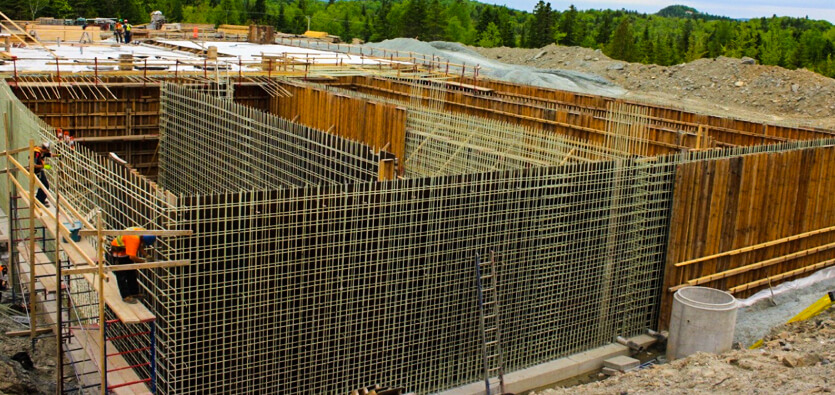
The project, located in Thetford Mines, Quebec, Canada, is the world’s’ first RC water facility reinforced with GFRP bars. The component of the project reinforced with GFRP bars were the foundation, vertical walls, and cover slabs.

Challenges

RC water tanks have to sustain uniquely different environments in which corrosion poses serious threats. This is why concrete tanks deteriorate faster than any other structure as a result of direct and permanent exposure to aggressive chemical environments. Structural engineers have tried a number of techniques to minimize the intensity of harsh environmental elements on water tanks. The above-mentioned project clearly demonstrated the true potential of GFRP rebar in building corrosion-free concrete members.

Objectives

The objective behind using GFRP bars in this particular project was to eliminate corrosion related issues and build a sustainable and maintenance-free water chlorination tank as it is considered one of the most important components in the city’s new water treatment plant.

Findings

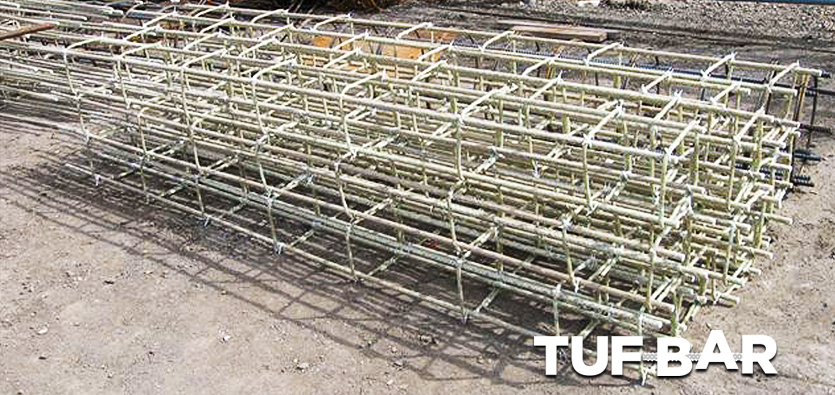
The construction stages of the tank, from foundation and walls to cover slabs, were completed on time and with no precautions about the concrete casting and installation of GFRP rebar. GFRP bars are ¼ the weight of steel. The property of GFRP bars of being lightweight allows engineers to carry out handling and installation of reinforcement with great ease. Construction details, leakage test results, and strain data obtained under conditions concluded that:

  • GFRP rebar played a critical role in overcoming the corrosion related problems in the water facility.
  • GFRP bars offered ease of installation with no obstacles throughout the water tank’s construction process.
  • The performance of water tank was incredible in terms of withstanding applied loads and leakage during the test, while the components of tank reinforced with GFRP bars demonstrated normal performance in terms of cracking and strain during the first 10 months of real service conditions.
  • It was the first time GFRP bars were used to construct RC tank for a water treatment plant.
  • Excellent in-practice results will encourage the civil engineering community to use GFRP bars increasingly in building water tanks in Canada and across North America.
  • GFRP bars extend the life of RC structures to 100 or more years without any major maintenance and repair.

Conclusion

The waterside RC infrastructure has been deteriorating for many years largely due to the inability of steel to withstand harsh environment and heavy loads. The deteriorating water facilities is a large-scale national problem that has been widely reported. Because of their many advantageous characteristics, GFRP bars offer a new and promising solution for a variety of civil construction problems. GFRP’s strengths mesh with the shortcomings of several conventional materials, making advanced composites a material of the 21st Century.

Major Applications of FRP in Bridge Engineering

BRIDGR-ENGINEERING

Rehabilitation of existing concrete structures using externally bonded reinforcement techniques is probably the first application of FRP composites in civil engineering. Fiber reinforced polymers (FRPs) have gained considerable popularity as a sustainable and cost effective rehabilitation materials. Taking into account the properties of advanced composites, FRP strengthening methods can save the world billions of dollars annually. The blog post will discuss some of the applications of FRP composites in bridge engineering.

Composite materials used for retrofitting and strengthening can be used in form of FRP strip or sheet depending on the nature of a project. The prime function of the rehabilitation applications of FRPs in bridge engineering is to increase flexural and shear capacity of beams, girders, and slabs. Adhesive bonding and wet lay-up are some of the methods used to carry out external FRP reinforcement.

The biggest reason why civil engineers were reluctant to use composite materials in the past was the lack of in-practice data and the availability of design codes. Now civil engineers have sufficient data and codes to confidently conclude that FRP composites offer effective ways to improve strength and stiffness of existing concrete members. Following are some of the major applications of advanced composites in bridge engineering:

Seismic retrofitting of concrete bridges

It is important to modify existing bridges and enhance their strength so that they can withstand earthquakes and other natural calamities. Advanced composites offer a level of strength necessary for a concrete structure to handle severe shocks and heavy traffic load. They are used in form of wrapped column to enhance the capacity of a structure to absorb earthquake shocks. Traffic disruption is the major problem engineers face during the retrofitting process. Traditional retrofitting materials are heavy and difficult to install. FRP composites, on the other hand, are lightweight, making it easier for engineers to complete a project quickly without causing major traffic disruptions.

Internal reinforcement

According to stats, thousands of bridges in North America are structurally deficient. Corrosion of steel reinforcement is the primary cause of deterioration of concrete bridges. Advanced composites, such as GFRP bars, are corrosion resistance and proven to be the ideal materials for building durable marine structures. Bridges have to withstand aggressive environmental conditions that can cause spalling of concrete cover. Instead of spending billions of dollar on maintenance and repair, the construction industry should expedite the use of FRP composites.

Bridge decks

Bridge deck is the most vulnerable part of a bridge structure. The composite bridge decks offer sustainable and lightweight solutions to bridge engineers. The construction industry in developed countries like Canada, Japan and America is already making a good use of composites in building sustainable bridge infrastructure. GFRP fiberglass bars is the best example of how composite materials can revolutionize the civil engineering.

The advantages of GFRP materials over traditional construction materials are their high strength-to-weight-ratio, ability to be molded into various shapes and sizes, and superior resistance to environment, resulting in low or zero maintenance cost. These properties make GFRP rebar an excellent alternative for sustainable construction.

Consult TUF-BAR to know more about GFRP rebar and its application in bridge engineering.

How FRP Composites Can Help Build Sustainable Concrete Infrastructure

A brief introduction to FRP composites

Fiberglass Rebar

brief

Fiber reinforced polymer (FRP) is a multiphase material consisting of high strength fibers embedded in a polymer matrix. The strength and unique properties of FRP composites were initially tested and utilized by the aerospace industry in the 1960s. Following the exceptional performance in the aerospace industry, FRP composites started displaying their potential in building new concrete structures and maintaining the existing concrete structures in the late 1990’s. As compared to traditional construction materials such as steel, FRP composites offer highly desirable and unique properties.

The construction industry cannot accept a material until its properties are thoroughly tested and proven. Extensive research at various national and international levels pave the way for composites to address the contemporary construction problems.Today, one of the biggest concern for the construction industry is the inability of conventional materials to address deterioration related issues. FRP composites, also called the material of 21st Century, has the solution civil engineers have been looking for.

Civil Engineering

Carousel

Properties of FRP Composites

The mechanical and physical properties of FRP composites depends largely upon its constituents and the manufacturing process. The role of fibers is to provide strength and stiffness while polymeric matrix ensures environmental protection and contributes to load transfer. The role of additives and modifiers is to deal with surface smoothness, crack resistance, and the overall performance of FRP bars. Some of the leading properties of FRP composites include:

  • High tensile strength
  • High strength-to-weight ratio
  • Excellent bond strength
  • No susceptibility to corrosion
  • Electrically and thermally non-conductive

Deterioration: a growing concern

Worldwide deterioration of traditional material such as black steel is a growing concern for governments. More than 50,000 bridges in the US are structurally deficient and need to be either replaced or rehabilitated. There is an unprecedented need for rust free construction materials. Being a potential solution to this rising problem, FRPs are gaining rapid recognition from the civil engineering community. One of the growing applications of FRP composites is the rehabilitation of degraded concrete structures.The construction agencies can extend the service life of concrete infrastructure by using FRPs as external reinforcement materials.

concrete_spalling

Environmental durability of FRP composites

The effects of corrosion on the service life of reinforced concrete structures The advanced composite materials have produced results in terms of environmental durability. Civil engineering projects such as highways, bridges, waterways, and marine structures play a decisive role in building a healthy and sustainable economy. Concrete deterioration costs the construction agencies billions of dollars as a direct maintenance cost. Over the past couple of decades, FRP composites have gained considerable popularity as an ideal material for rehabilitation applications. However, rehabilitation of existing concrete members is just an application of FRP composites.

A full-scale use of FRP bars enables civil engineers to build environmentally protected projects that can withstand the impact of the harsh environment.FRP materials are increasingly being used in civil engineering applications such as reinforcing rods and tendons, wraps for seismic retrofit of columns externally bonded reinforcement, composite bridge decks, and even hybrid and all composite structural systems. Since FRP are still relatively unknown to the infrastructure system planner, there are heightened concerns related to the overall durability of these materials, especially as related to their capacity for sustained performance under harsh and changing environmental conditions under load.

Sustainable concrete infrastructure

Infrastructure management

According to stats, around 50% of the construction budget is spent on the rehabilitation of existing concrete infrastructure in Europe. Rehabilitation is a broad term that includes repair, inspection, maintenance, and seismic retrofitting. Hidden costs such as traffic delay cost are around 20% of the total construction cost. Concrete structures reinforced with traditional means need to be maintained and upgraded in order to make them sustainable.

Sustainability

Sustainable construction materials and techniques can help governments build structures with long service life without spending too much on maintenance. It is hard for a country to progress if its concrete infrastructure is not stable and durable.

How can FRP composites help?

As discussed earlier, FRP composites perform exceptionally well under heavy loads and severe environment. A building reinforced with fiberglass rebar hardly need any maintenance. Therefore, the construction industry must adopt modern materials to build concrete structures that can serve for a long period of time.

The ideal applications of FRP composites

Civil engineering applications of GFRP bars or FRP composites are:

  • Any concrete member that is susceptible to chloride ions and chemicals
  • Applications require thermal neutrality: research laboratories, health facilities, military applications.
  • Mining and tunneling where machinery will consume the reinforced structures
  • Applications which demand electromagnetic neutrality

The Peace Bridge in Canada was built using GFRP reinforcement

1KC7442B

Rehabilitation of Concrete Columns With FRPs

The purpose of confining concrete is to improve its strength, durability, and overall performance. In past, longitudinal steel bars and concrete were added around existing structure to enhance reinforced concrete columns. In addition, a steel jacket was applied to a concrete column to add some extra strength to the structure. However, these conventional rehabilitation techniques were difficult to carry out.

High-strength fiber composites have been extensively and successfully tested and applied as an effective and durable material for the external confinement of concrete. Confinement of concrete with polymer composites sheets have demonstrated excellent results when it comes to compression and sustainability. Fiber-wrapping of existing concrete as a rehabilitation measure and encasement of concrete with advanced composites for new projects are two modern ways of confining concrete columns. The application of wrapping can be either continuous over the surface or as strips.

The composite wrapping systems have largely been used in North America and Japan for seismic loading and rehabilitation of bridges. The growing awareness for corrosion-free construction materials has really promoted the use of fiber reinforced polymers throughout the world.

FRP bars in a bridge deck

1KC7442B

Florida Department of Transportation

FRP reinforcement techniques

The construction industry started using advanced composite materials in the 1970s. Extensive research has been carried out in order to enhance certain physical properties of FRPs. Industrial research and the use of composite materials have broadened the scope and applications of fiber-reinforced construction material. Following are some of the FRP reinforcement techniques:

External reinforcement

It is financially convenient to repair or strengthen a concrete structure than to build a new one. FRP reinforcement material is widely used to repair and strengthen structurally deficient structures like bridges, buildings, and other concrete members.

There are several rehabilitation techniques that engineers use to rehabilitate a concrete member with fiber-reinforced polymers. Following are some of the techniques that use GFRP and other FRP variants to rehabilitate a deteriorated member.

  • Bonding of the FRP plates to the adhered
  • Unstressed FRP Flexural plates bonded in a position
  • Near-surface mounted FRP reinforcement
  • Flexural strengthening of prestressed structures
  • Seismic retrofitting of reinforced concrete

Internal reinforcement

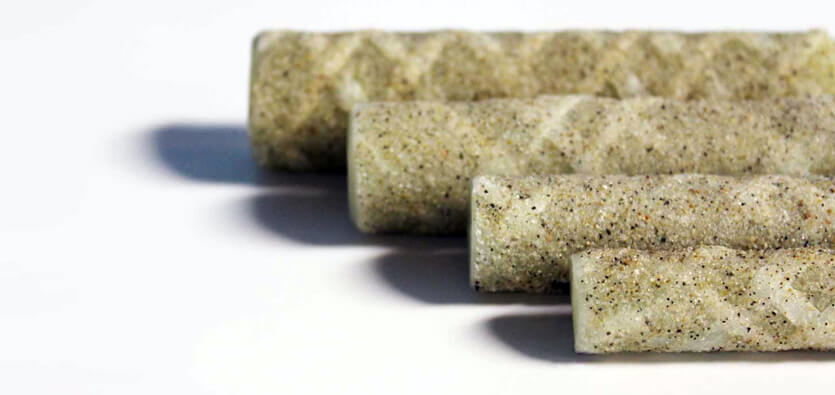
For internal reinforcement of concrete members, FRP bars are fabricated using a pultrusion method. It is inevitable to prepare the bars made of fiber, carbon, or aramid in order to develop an excellent bond characteristics between bars and concrete. First, a peel-ply can be applied to the surface of fiberglass bars in the manufacturing process; a rough surface of the pultruded bars brings about good bonding.Second, pultruded bars can be over-winded with fibers. Third, a layer of sand can be bonded with the adhesive to the surface of pultruded bars.

Conclusion

Healthy concrete infrastructure saves money and time for both government and tax payers. The initial cost of using FRP composites might be high. However, the long-term performance and minimal maintenance cost make FRP composites as highly cost-effective and sustainable construction material. New design codes, in-practice statistics, and extensive research has encouraged the construction industry to use advanced composites (FRP) for building sustainable concrete members.

FRP Rebar Manufacturer in North America

North America is the largest producer and consumer of FRP composites. TUF-BAR is one of the leading GFRP fiberglass bars manufacturers in the region. The company produces highest-quality fiberglass construction material including Rebar, Rock Bolts, Form Ties and Concrete Anchors which are corrosion free, strong and lighter alternative to traditional steel reinforcement. TUF-BAR fiberglass bars are specified for use in roadways, bridges, dams, concrete slabs, barrier walls, marine applications, tunneling, temporary applications, and power generation facilities. For details, please visit our website (PRODUCTS SECTION) or one of our offices in Canada and United States. Location details can be found on our website’s Contact Us page.
Advantages of FRP Composite Plate Bonding

Advantages of FRP Composite Plate Bonding

The number of concrete structures in the world is increasing, so does the need for sustainable construction materials. Maintenance is an inevitable activity that ensures a structure reaches or exceeds its expected service life. It is financially disadvantageous to replace a structure when it can be rehabilitated. External reinforcement can be the only alternative to partial replacement or demolition in some cases. Loads on bridges, for instance, is continuously increasing following the tremendous rise in the number of vehicles. Apart from the increased traffic load, corrosion induced deterioration is also a major concern for the construction industry. These factors uncover the need for rehabilitation of the existing deteriorated and underperforming concrete infrastructure.

Taking into account the properties and in-practice performance, FRP composites are the best available solution when it comes to the rehabilitation or strengthening of structurally deficient concrete members. The structural issues could have more than one solutions. However, the final decision depends on the economic evaluation of alternatives. A considerate approach is to consider the total maintenance and consequential costs required to maintain a structure throughout its service life.

FRP composite materials are not just the improved form of conventional materials. They offer unique and highly desirable properties. The range of structural needs and shortcomings for which FRP plate bonding offers a practical solution is wide. Following are some of the advantages of strengthening concrete members with FRP composite plate bonding:

High strength

FRP plates can be designed in accordance with the nature of a project or requirements by exploiting the combination of plate constituents such as fibers. In other words, the strength of fiber reinforced polymer plates may vary depending on its constituents and manufacturing process. However, the average strength of FRP plates is three times the strength of steel plates.

Lightweight

Composite materials offer high strength-to-weight-ratio as we know fiberglass bars are ¼ the weight of steel. FRP bonding plates, being a lightweight material, save builders significantly in transportation and installation. A 20 m long composite plate can be carried on site by a single man. The flexibility of plates allows engineers to carry out strengthening schemes within a limited space. On the other hand, installing steel plates involves a proportion of works cost.

Reduced project completion time

Many of the practical advantages of using glass fiber reinforced polymer (GFRP) rebar and other reinforcement material is the reduced construction period. Fiberglass reinforcement bars, for example, enable engineers to complete a project in greatly reduced time periods, thus, lowering contract and traffic delay costs. Composite plates, similarly, can be installed from mobile platforms in a short period of time when compared with traditional plates.

Protection against corrosion

Corrosion resistance is a well-known property of composite materials. Traditional construction materials, unlike FRP, cannot withstand the environmental conditions for a very long period of time. FRP composite plates, therefore, do not suffer from severe environmental elements.

The construction industry is now aware of the implications and durability of the materials they use and why advanced composites are the best available concrete rehabilitation materials. Using composites for strengthening concrete structures is one of the effective techniques to control degradation and eliminate structural deficiencies.

The Effects of Corrosion on the Service Life of Reinforced Concrete Structures

The-Effects-of-Corrosion-on-the-Service-Life-of-Reinforced-Concrete-Structures

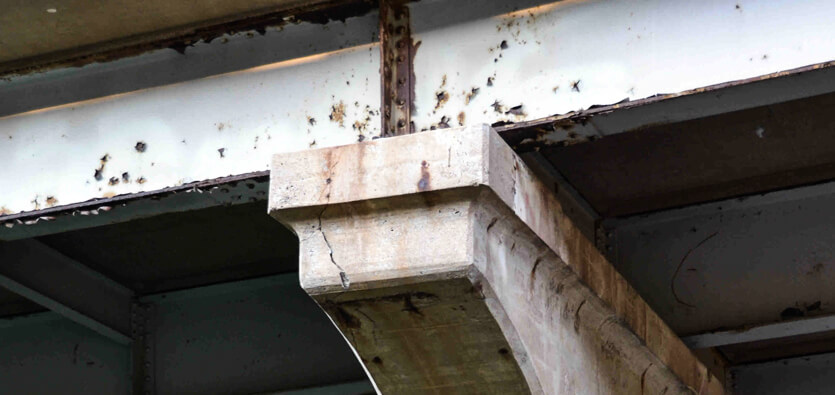
Corrosion of reinforcing steel has been recognized as a leading cause of concrete degradation in civil infrastructure. The corrosion of steel reinforcing bars has been largely associated with chlorides. Seawater and deicing chemicals are two of the main sources of chlorides. Most of the bridges built in coastal areas are exposed to seawater.

Steel-reinforced bridges located in a snow-belt region start showing degradation signs in about 6 to 10 years after construction. Lack of maintenance and rehabilitation can turn these structurally deficient bridges into obsolete concrete structures well before their expected service life is reached. This blog post will analyze some of the corrosion effects on the durability of RC structures and how corrosion can be completely eliminated.

Corrosion-induced deterioration of reinforced concrete is generally controlled by three principal rate phenomena: corrosion rate, chloride diffusion rate, and deterioration rate. The chloride diffusion rate refers to the rate at which chloride ions diffuse through the concrete cover. Likewise, corrosion rate refers to the rate at which corrosion process progresses. The deterioration rate explains the pace at which concrete crack, spall, and delaminate. There are certain factors that influence these three rate phenomena.

Concrete degradation is a major concern for the construction industry as the cost to repair and replace deteriorated structures is in billions per year. Cement concrete has clearly become a material of choice for building small and large civil structures. A large number of studies and researches have been conducted to study the potential factors and conditions that can seriously damage the integrity of a structure and bring about or accelerate the deterioration process. Several measures have been developed and implemented to stop the chloride-induced corrosion of steel bars.

It becomes practically impossible for a degraded structure to reach its expected service life without rehabilitation. In North America, billions of dollars are spent annually in order to repair the structurally deficient concrete structures and make them last longer. Civil engineers are continuously looking for corrosion-free construction materials that can resist the environment effectively and provide the required strength. Civil engineers and researcher had failed to come up with a durable and cost-effective solution until they introduced composite materials as a potential corrosion solution.

Glass fiber reinforced polymer (GFRP) is a material of choice for concrete reinforcement in Canada and across North America because of its unique properties: corrosion resistance, high strength-to-weight-ratio, excellent fatigue performance, and electromagnetic immunity. A complete rust-free project can offer the service life of over 100 years without any major maintenance cost. This fact clearly demonstrates the significance of fiberglass reinforcing bars in building structures that have inbuilt corrosion resistance mechanism.

Composite fiberglass rebar ensures that the ability of a structure to resist environmental loading is greater than the environmental loading on the structure. Because of the effectiveness of composites in controlling corrosion, civil engineering applications of GFRP bars are increasing. TUF-BAR is one of the manufacturers of fiberglass rebar that provides structurally and economically feasible construction solutions in Canada and United States.

FRP Composites And Construction Parameters

FRP COMPOSITES

Construction material can be divided into three kinds depending on the way atoms and molecules are bonded together. One of them is the organic polymeric material which is made of nonmetallic elements bonded to macromolecular compounds. The quality of composite materials is gauged both from structural and functional perspective. There is a wide range of composite materials with varying properties. Glass fiber reinforced polymer (GFRP) is the most prominent form of FRP composites. Fiber reinforced polymer (FRP) is the fastest growing construction material that offers highly specific strength and modulus coupled with superior environmental stability. Following are some of the construction parameters of FRP composites:

Construction

Civil engineers have to deal with a number of complexities when it comes to the installation of traditional construction materials and implementation of traditional construction techniques. One of the distinctive features of FRP composites is that they enable structural engineers to complete a project quickly without causing major inconvenience to road users. FRP composites are lightweight and can be manufactured offsite in facilities and be assembled on-site with the help of light equipment. This leads to costs reduction in terms of transportation and work. Moreover, lightweight composites make it convenient for civil engineers to work in inaccessible and environmentally restricted areas.

Cost

We can analyze the cost of constructing a structure with FRP composites from short-term and long-term perspective. In short-term cost, elements such as design, construction, and installation are discussed. While the long-term cost generally includes maintenance and modifications. If we compare FRP composites with traditional materials, the initial cost of FRP composites is relatively high. However, the price of FRP composites has fallen considerably over the past couple of decades. The price gap between traditional and composite materials has decreased mainly due to the development of modern manufacturing techniques and design codes.

FRP composites are highly cost effective when it comes to the long-term cost of a project. We understand how much it cost to maintain a concrete structure reinforced with substandard material. FRP composites have superior resistance towards corrosion and degradation which ultimately reduces the long-term maintenance cost.

Dimensional stability

Flexible design and ability to meet emerging needs and requirements are the key features of FRP composites; possibility to produce large and complex shapes demonstrates the flexibility in manufacturing custom products. As compared to conventional materials, FRP composites offer better aesthetics and geometric efficiency. If subjected to severe corrosive environment and stress, FRP composites maintain the dimensional stability more effectively than conventional materials.

FRP-Composites-And-Construction-Parameters

With the growing problem of worldwide concrete degradation and high maintenance cost, FRP composites have emerged as the leading construction solution that can help build and maintain sustainable concrete structures. Taking into account the construction parameters and the properties of composite materials, it is highly recommended to utilize these innovative and durable materials in order to build long-lasting and cost-effective projects.