The Advantages Of FRP Composites As Compared With Traditional Materials

The Advantages Of FRP Composites As Compared With Traditional Materials

The most significant requirement concerning building and engineering concrete structures include ensuring reliability and safety. These requirements should be met not only during the implementation process but also during the entire lifecycle of a structure. The reliability and safety of the concrete structures are specified depending on their function and the place of their achievement.

The use of advanced composite materials such as GFRP fiberglass rebar can help resolve typical deterioration problems that are associated with conventional steel reinforcement materials. The key advantage of advanced composites, when compared with traditional materials, is their ability to increase the service life of a concrete structure and provide a solid resistance against severe environmental conditions such as corrosive agents, aging, and degradation.

Since FRP composites offer high strength-to-weight ratio and can be customized according to the project requirements, they enable structural engineers to complete a project with great ease. Following are some of the advantages and properties of FRP composites and why they are better than traditional materials:

Design properties

  • High capacity of live loads
  • Dimensional stability
  • Flexible design to help meet structural needs
  • Low thermal expansion coefficient
  • Aesthetics possibilities
  • Non-magnetic and customizable
  • Higher resistance against pyrolysis
  • Better burn through resistance

Mechanical properties

  • High tensile strength
  • Better seismic resistance
  • Resistance against atmospheric degradation and weathering
  • Excellent resistance against freeze-thaw cycles
  • Good stiffness to weight ratio
  • Resistant to deicing salts

Cost

  • Zero or less maintenance cost
  • Savings due to rapid project completion
  • Lower user cost
  • Considerable decline in price

Construction parameters

  • Ease of installation
  • Less expensive equipment required to handle material
  • Reduced transportation and assembly cost
  • Reduced traffic delay
  • Less labor required in installation process
  • Longer service life

FRP composites offer unique and high-demand properties. The construction industry in Canada and across North America needs reinforcement materials that can build sustainable concrete infrastructure and reliably rehabilitate the existing structures.

Disadvantages of traditional materials

One of the most alarming disadvantages of steel is its high maintenance cost because steel structures are susceptible to corrosion when exposed to moisture, salts and other corrosive elements. Following are some the reasons why FRP should be and steel should not be your first choice for your next project:

  • Steel has weak resistance against fire or high temperature
  • It loses its ductility under certain conditions
  • High expansion rate in changing temperature
  • Heavy material and thus involve expensive transportation
  • Energy intensive to produce

Traditional construction techniques using traditional materials generally involve complexities both in terms of manufacturing and installation. Some of the examples of these complications include traffic inconvenience, delay in the project opening, and environmentally unfriendly construction process. On the other hand, GFRP fiberglass rebar offers faster, easier, safe, and cost-effective manufacturing and installation.

TUF-BAR, as one of the leading manufacturers of fiberglass rebar and accessories, strives to engineer and innovate sustainable construction materials capable of addressing the widespread structural concerns which traditional materials have failed to address. Consult us to know how our GFRP construction products can help you build durable and maintenance-free projects.

Corrosion of Reinforced Concrete: Causes and Solution

Corrosion-of-Reinforced-Concrete

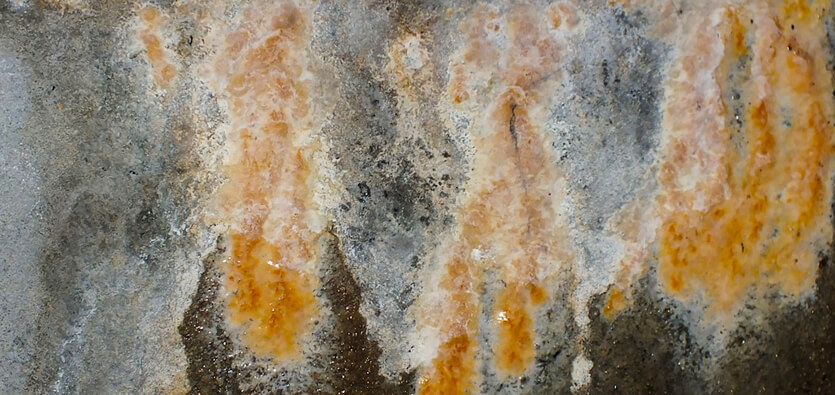
Portland cement concrete is world’s most widely used construction material because of its incredible durability. However, factors such as material limitations, construction practices, and severe environmental conditions can lead to concrete deterioration and structural problems. Concrete deterioration is associated with a number of reasons. Salt-induced reinforcing steel corrosion in concrete structures, for example, is one of the major reasons why construction and transportation agencies have to spend billions of dollars every year to rehabilitate the corroding concrete infrastructure.

1. Deicing-salt corrosion

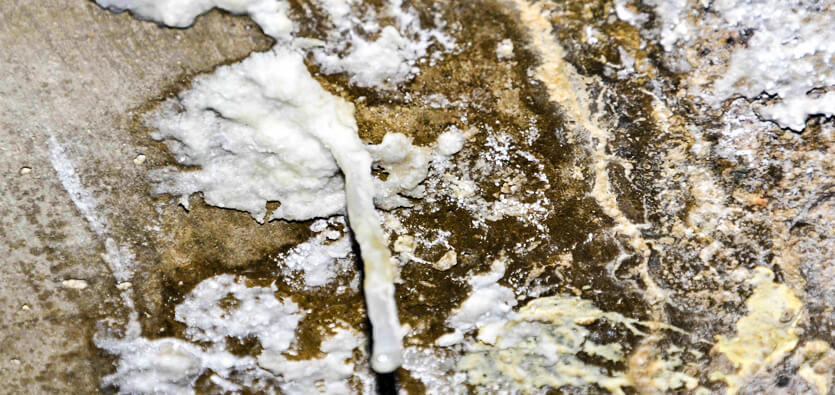
The massive spreading of salts on roadways, airport pavements, and other transportation concrete structures is one of the reasons of concrete deterioration. The use of sodium chloride, calcium chloride, and magnesium chloride has increased considerably over the past few years. These salts absorb moisture from the air and become extremely corrosive once a certain level of humidity and temperature is achieved. Apart from environmental concerns, the excessive use of deicing salts are criticized for it contributes to corrosion of steel reinforced concrete.

Deicing-salt-corrosion

2. Freeze-Thaw cycles

Reinforced concrete structures are simultaneously subjected to various physical and chemical attacks. Freeze-thaw induced deterioration is also one of the reasons why concrete cracks and loses its strength. When water freezes, it expands and the frozen water concentrated inside the concrete produce pressure in pores and capillaries. The cavity will rupture and dilate when the pressure exceeds the tensile strength of concrete. The accumulative effect of successive freeze-thaw cycles will eventually lead to expansion and crumbling of the concrete.

3. Corrosion of the steel reinforcement

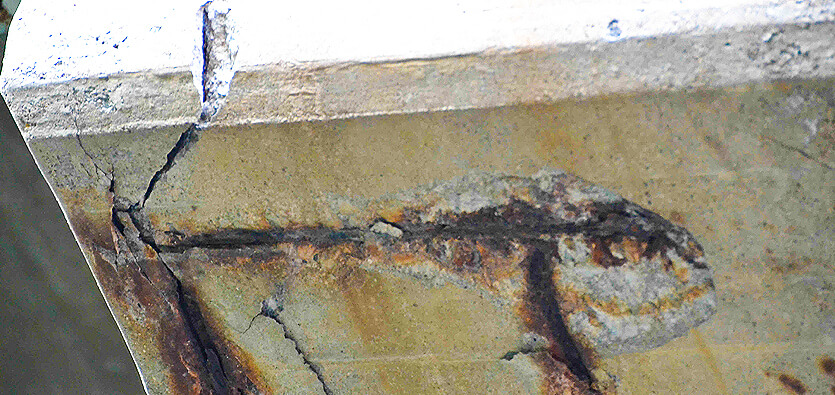
The leading cause of deterioration in most of the structurally deficient bridges is the corrosion of steel reinforcement. The conventional materials like steel cannot withstand the harsh corrosive agents and thus require perpetual maintenance and rehabilitation which ultimately increases the cost of a project in the long run. To permanently eliminate the problems associated with reinforcement corrosion, researchers and structural engineers have developed FRP materials which are corrosion-free and superior in terms of strength.

Corrosion-of-the-steel-reinforcement

Related: The effects of corrosion on the service life of reinforced concrete structures

Solution

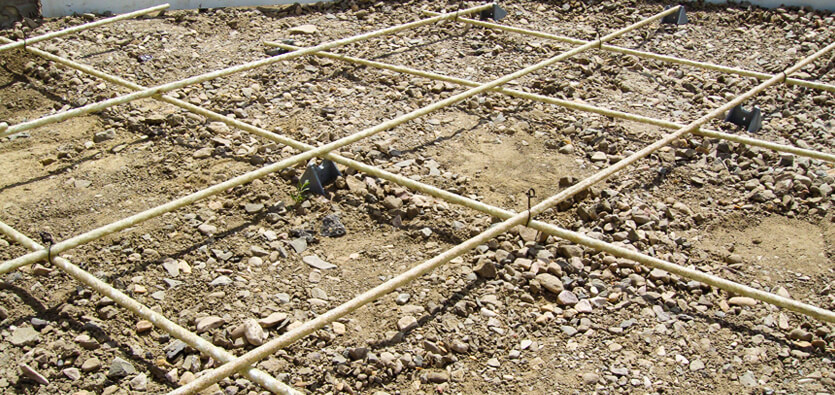
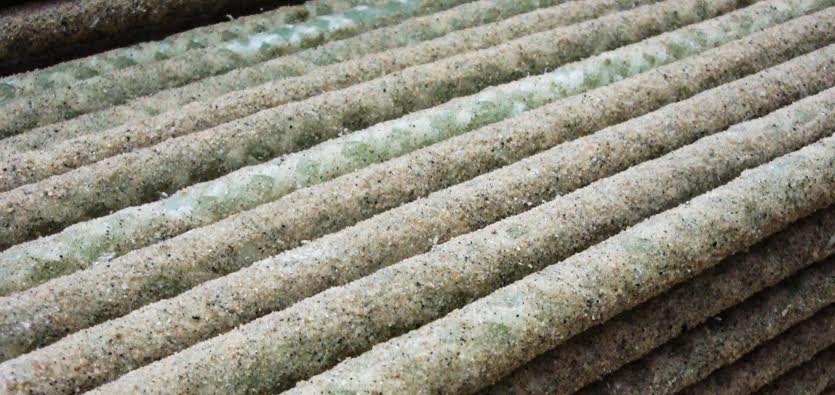
Fiber reinforced polymers are non-metallic materials which do not corrode. The adoption of emerging construction materials and techniques such as GFRP fiberglass rebar, adequate concrete cover, good design and construction practices can dramatically reduce corrosion related problems. Fiberglass rebar is now being used increasingly as an alternative to conventional steel bars.

TUF-BAR strives to produce and deliver corrosion-free and environment-friendly construction materials including fiberglass bars, rock bolts, concrete lifting anchors, and form ties in North America. Our rust-free fiberglass rebar is designed to enable concrete structures successfully bear heavy loads and harsh environment for more than 100 years with almost zero maintenance.

Durability of GFRP Reinforcement: Field Studies

Durability of GFRP Reinforcement: Field Studies

Introduction

Corrosion of reinforcing steel that occurs in concrete structures subject to the harsh environment is one of the pressing durability concerns. The problem of corrosion can be eliminated if steel reinforcement is permanently replaced by chemically inert FRPs. Glass fiber reinforced polymer (GFRP) is probably the most economical choice among the available composite construction solutions. In situations where deicing salts are frequently used to keep roads free of ice, the highway and bridge components vulnerable to rust can be made corrosion-free by replacing steel bars with fiberglass bars.

Research and development

The development efforts and extensive research carried out at the University of Sherbrooke in Canada have led to the GFRP bars’ current success and their increased use as internal reinforcement in concrete infrastructure. The purpose of the on-going research and experimental studies is to transfer the FRP technology from research centers to the marketplace. The major subject of the research and studies is to understand the behavior of concrete structures reinforced with GFRP rebar.

A study conducted by ISIS Canada in 2004 to determine the durability of GFRP reinforcement in concrete analyzed the performance of GFRP reinforced structures that have been in service for 5 to 8 years. Following are the three of all selected concrete structures:

chatham-bridge

1. Chatham bridge

A more than 8 years old concrete structure located in Chatham, ON, Canada, Chatham Bridge was built with steel-free deck slabs. The bridge deck is subject to deicing salt and continuously changing environmental conditions from wetting-and-drying to freezing-and-thawing.

joffre-bridgr

2. Joffre bridge

Constructed over the St-Francois River, Joffre bridge was built with GFRP rebar. Joffre bridge experiences harsh environmental conditions similar to those of Chatham bridge.

halls-harbour-bridge

3. Hall’s Harbour Wharf

Hall’s Harbor Wharf was the first marine structure in Canada constructed using GFRP reinforcement. The structure is subject to extreme weather, salt water, and chloride-laden moisture.

Conclusion

All the selected structures are exposed to harsh environmental conditions. GFRP reinforcement was analyzed for its physical and chemical composition at the microscopic level. The study concluded that there was no sign of corrosion or deterioration of the GFRP in the concrete structures for up to 8 years and that FRP bars are effective reinforcement to column, beams, and slabs. The bond between concrete and reinforcement was in good shape concluding that phenomena such as deicing salt, freeze-thaw cycles, and wet-dry cycles had no adverse effect on the fiberglass rebar.

The study instills a sense of confidence in the construction industry to permit the use of GFRP as primary reinforcement in concrete structures. As a result of this research, the use of advanced composites as internal reinforcement in concrete structures where steel corrosion is one of the concerns has gained considerable acceptance. However, the structural engineers are not fully aware of the unique benefits of this technology.

The successful field applications in North America and internationally demonstrate the feasibility of FRP rebar as an ideal alternative internal reinforcement to environment-sensitive structures such as bridges, retaining walls, transportation infrastructure, water tanks, sewer plants, military and research facilities. More durability tests and experimental evidence will further improve the quality of FRP construction product, increased utilization of this innovative material, and new market opportunities.

FRP Composites and Seismic Rehabilitation of Bridges

FRP Composites and Seismic Rehabilitation of Bridges

Fiber reinforced polymer (FRP) composites are now widely used for seismic strengthening of the reinforced concrete members as conventional materials pose complications. Although it is cost-effective to use steel plates, the strengthening technique is labor intensive and have many disadvantages. One of the major disadvantages of traditional strengthening techniques is the manipulation of heavy steel and the risk of corrosion. It is also impossible to visually examine the condition of a concrete member following a seismic event.

FRP composites consist of two components: fiber reinforcement and polymer resin matrix. Fillers are used as a secondary component to improve the quality of FRPs in terms of dimensional stability and environment resistance. Additives are also used to customize the properties of the final product. In the past, tt was not easy for the construction industry to utilize advanced composites as there was lack of research and in-practice data.

Seismic retrofitting

The purpose of a seismic retrofit is to strengthen and modify a bridge so that it can survive earthquakes that could otherwise cause it to fail. The first thing that structural engineers have to define is what they want their seismic retrofit to accomplish. To be able to effectively design either new bridges or retrofit measures for existing bridges, it is essential to have a clear understanding of potential problem areas. A systematic examination of the damage that has occurred to bridges in the earlier earthquakes can help develop that understanding.

broken-bridge

The scope of FRP composites

Attributing to the advantages of high strength, lightweight and incredible workability, FRP sheet has been widely used for repairing and strengthening of RC members in the last couple of decades. One of the techniques is to use FRP sheet to retrofit columns with premature termination of longitudinal reinforcement. FRP sheet is also utilized to reinforce ductility of the columns by jacketing around the plastic hinge in the circumferential direction. Bridge columns are the parts most vulnerable to seismic activities. Following are three FRP seismic retrofitting techniques:

  • Column strengthening
  • Retrofitting of beam-column joints
  • Retrofitting of RC beams

Why FRP composites?

FRP composites are used to considerably increase strength and ductility without increasing stiffness. Therefore, the use of FRPs in seismic retrofit applications can help prevent the need to retrofit other parts of the structure. Following are some of the key metrics of FRP application for seismic retrofitting as compared with steel and other conventional techniques:

  • High stiffness and strength-to-weight ratio make advanced composites ideal for strengthening and seismic retrofitting.
  • The durability and mechanical characteristics of FRPs can be customized in accordance with the application.
  • FRP composites protect the inner reinforcement against rust as they can effectively withstand the harsh environment.
  • It is easy to produce, handle, and install FRP wraps without any heavy equipment.
  • The reduced maintenance cost and long service life make FRPs economically viable strengthening solution.

Following the new design codes, refined manufacturing processes, and reliable experimental results, it is proven that composite construction materials are highly effective in improving the seismic performance of structurally deficient concrete components.

TUF-BAR, being a leading producer of GFRP fiberglass rebar in North America, strives to manufacture environment-friendly and durable construction materials.

Construction Parameters of FRP Composites

Construction Parameters of FRP Composites

The construction industry today needs a strong alternative to the traditional construction materials which have many disadvantages such as being sensitive to the harsh environment and a low strength-to-weight ratio. FRP composites have gained considerable popularity in the civil engineering circles mainly due to its advantageous physical, mechanical, and chemical properties.

Dimensional stability

As compared to conventional materials, FRP composites offer the ability to meet complicated construction needs and flexibility in design and manufacturing. FRPs help engineers build sustainable concrete structures in terms of stability, geometric efficiency and aesthetics. They maintain their dimensional stability even when exposed to corrosive agents, extreme temperature, and stress.

Installation

One of the disadvantages of traditional construction materials is the complicated manufacturing and installation process. Complexities in the installation process cause inconvenience to both workers and public. On the other hand, FRP materials enable engineers to complete a project quickly without facing any additional issues. GFRP fiberglass rebar, for example, is ¼ the weight of steel.

The quality of being lightweight and superior in tensile strength is the reason why FRP composites offer quick project delivery. In addition, FRP composites can be assembled on-site with the help of light equipment. This feature reduces the construction and transportation cost. Full repetition of forms that are accurate in terms of dimensions can only be achieved with FRP composites manufactured through pultrusion process.

Maintenance

A concrete member reinforced with steel demands continuous maintenance and repair. Following the rapid deterioration of steel, the concrete infrastructure in the United States and across North America requires rehabilitation at a mega scale. More than 50,000 bridges in the United States are structurally deficient. Rehabilitation of the existing concrete members is probably the biggest application of FRP composites in civil engineering.

Projects reinforced with FRP composites require less maintenance during their service life. The ability of composites to withstand severe corrosion and heavy loads enables a concrete structure to achieve long service life. Moreover, it is less expensive to repair or maintain an FRP composite structure as compared to a steel structure.

Cost

It is important to evaluate the expected long-term cost of a project before selecting the construction material. FRP composites are probably expensive when we consider only the initial cost of a project. Following the development of new manufacturing techniques, the cost of FRP composites has dropped significantly over the past few years. Since the installation time is significantly reduced with the lightweight FRP composites, this enables cost savings in terms of reduced traffic interruption and less labor effort.

The construction industry in Japan, Europe, and North America has already realized the unique and promising properties of GFRP reinforcement. TUF-BAR produces the highest-quality GFRP bars in North America. The company focuses largely on developing new and cost-effective concrete reinforcement for a wide range of applications from rehabilitation to building new projects.

The Application of GFRP Bars in Building Parking Garages

The Application of GFRP Bars in Building Parking Garages

Introduction

Precast concrete garages are usually made up of a system of conventionally reinforced precast concrete column, slabs, beams, and girders. Parking garages are subject to more deterioration than most of the concrete members. The use of deicing salts during the winter triggers and accelerates the deterioration process in such structures. Reinforcing steel corrosion and perpetual concrete deterioration can weaken structural members due to loss of effective concrete cross section, reinforcement cross section, and connection failure. Replacing corrodible steel with corrosion-free FRP composites is the only practical and cost effective solution for eliminating the potential risk of corrosion and degradation.

GFRP reinforcement

Glass fiber-reinforced polymer (GFRP) reinforcement has demonstrated great potential for integration into the parking, transportation, and waterside concrete infrastructure. Fiberglass materials have long and useful lives. They offer solid resistance against corrosion, ease of construction, excellent strength-to-weight characteristics, and custom fabrication in terms of strength, stiffness, geometry, and other properties. This is the reason why GFRP reinforcement is being widely accepted as a viable solution to corrosion related problems in concrete members.

The blog post will analyze a case study: “Design, construction, and performance of the La Chanceliere parking garage’s concrete flat slabs reinforced with GFRP bars”, in order to understand the role of modern construction materials (GFRP bars) in building sustainable and maintenance-free parking garages.

La Chanceliere Parking Garage Quebec, Canada

La Chanceliere Garage was a 40-year-old concrete structure which needed to be rehabilitated following the severe corrosion of steel reinforcement in most of the slabs. The authorities decided to rehabilitate the structure by replacing structure’s flat slabs while maintaining the columns and retaining walls. After a careful evaluation and cost analysis of both steel and GFRP reinforcing bars, authorities decided to go with GFRP fiberglass bars for this project. According to the case study, it was the first parking garage rehabilitation project reinforced completely with GFRP rebar.

Findings

The performance of the completed project revealed that the decision to select GFRP reinforcement was absolutely right. Based on the in-service results and insights, it can be concluded that:

  • The GFRP rebar offered an economically viable solution to counter corrosion related issues in the RC parking garage structure.
  • It was seamless to implement GFRP bars and complete the project on time without facing any obstacles. The installation of GFRP bars and adhesive anchors was performed with great ease.
  • Over the last three and a half year, the RC flat slabs demonstrated normal performance so far as strain and cracking are concerned.
  • The construction process was carried out in compliance with the CSA 2012 design provisions, strength and serviceability criteria.
  • The cost analysis of the project showed that the GFRP reinforcement was a cost effective and dependable construction solution.
  • Following the continuous observation and monitoring, it was concluded that GFRP bars performed as anticipated.
  • The project clearly reflected the properties of advanced composites and how these modern materials can help civil engineers build sustainable and long lasting parking garages.

The existing GFRP-reinforced concrete structures clearly demonstrate the unique properties of FRP composites and their application in civil engineering. FRP composite materials are very effective against the harsh environment and corrosive agents. A concrete structure that can successfully withstand severe environment achieves a long service life without any major maintenance or repair. Parking garages and other sensitive concrete structures, therefore, should be built and rehabilitated with GFRP reinforcement.