Blog

Why Is It Important To Modernize Canada’s Public Infrastructure

Why Is It Important To Modernize Canada’s Public Infrastructure

Public infrastructure plays a critical role in a nation’s development and success, especially for a developed economy like Canada. One-third of Canada’s highway bridges are going through functional or structural deficiencies. While there are more than 20 million light vehicles and 15,000 transit buses using Canadian bridges annually, public infrastructure should ensure the safe and efficient movement of commercial goods across borders and within the country. Delaying necessary bridge rehabilitation can lead to tragic consequences.

In North America, there are more than 685,000 bridges, 80,000 of them are situated in Canada. In Canada, more than 30% of highway bridges are either functionally obsolete or structurally deficient. More than $48 billion was allocated from 2007 to 2014 as a part of Canada’s Economic Action Plan to revitalize and upgrade the country’s infrastructure. Approximately $5 billion is required annually to rehabilitate Canada’s bridges.

In the United States, structurally deficient bridges are used more than 174 million times daily. It is also reported that if timely steps are not taken, it would take more than 37 years to rehabilitate or replace all of the country’s structurally deficient concrete infrastructure.

It is important for the construction industry to reduce operating costs of bridges and other critical concrete infrastructure. Exploring advanced and innovative construction and rehabilitation materials has become inevitable as the maintenance costs to repair deteriorated concrete structures is rising every year.

Significance of advanced composite materials

Needless to say that advanced composite materials such as GFRP (Glass Fiber Reinforced Polymer) rebar have the potential to effectively meet bridge owner’s needs. Efforts are already being made to develop maintenance-free and long-life structures. However, new construction materials have to break technical barriers and present economically viable solutions.

Considering the current situation of concrete infrastructure in Canada and across North America, It has become critical to find alternatives to traditional materials which can build corrosion-free and maintenance-free structures. The right use of improved civil engineering technology, such as fiberglass-reinforced materials, is the only way to ensure sustainability.

While reducing the traffic on bridges and redistributing bridges’ structural stress may be a possible solution, it would be ideal to encourage the widespread use of corrosion-free and stronger longer lasting materials. GFRP rebar is the best example of how innovation can help us resolve several long standing structural issues. From building new bridges to repairing existing ones, GFRP reinforcement is a cost-effective and long-term construction solution.

Modernizing Canada’s public infrastructure and deploying new technologies is one solution to avoid a devastating economic crisis in the future.

The role of TUF-BAR

Considering the ongoing battle against concrete corrosion and structural deficiency in North America, TUF-BAR is actively working towards developing materials that can help the construction industry durably repair existing structures and build corrosion-free, high-strength, and cost-effective highway infrastructure which can address future challenges. Visit our website for more information!

Retrofitting Concrete Structures With Composite Materials

Retrofitting Concrete Structures With Composite Materials

The durability and performance of a concrete structure can be improved with the help of retrofitting. Failure of bonding, deteriorations, rust, and construction errors are some of the factors that make it necessary for structures to be retrofitted. The construction industry has been using traditional materials for hundreds of years to build and rehabilitate concrete structures. However, the introduction of composite materials (FRP) in civil engineering has completely reshaped the way the construction industry builds and upgrades concrete structures.

When it comes to retrofitting or rehabilitation, composite materials are superior to traditional materials both in terms of ductility and strength. Structural performance can be greatly improved with the help of GFRP and other composite materials available in the market. Bridge culverts, slabs, columns, and other structural components have been tested which reveals that retrofitting with composite materials offers numerous benefits and that composites are more effective and economically viable than traditional steel.

The use of fiber-reinforced materials for seismic retrofitting has gained considerable acceptance from the civil engineering community in the last decade. Restoration and preserving historical structures and structurally deficient concrete structures has become a worldwide concern. Billions of dollars are spent annually alone in North America to repair and strengthen existing concrete members. The construction sector can either repair and retrofit existing structures or rebuild them to avoid heavy maintenance cost.

GFRP reinforcement and retrofitting

Composite materials such as GFRP fiberglass rebar present durable retrofitting solutions. While traditional retrofitting methods don’t always provide reliable solutions. It is ideal to carry out retrofitting activities with composites as they provide technically superior and economical solutions for a wide range of rehabilitation applications.

It is now well-established that GFRP is a lightweight, corrosion-free and maintenance-free reinforcing material which results in less equipment-intensive retrofitting work and a less labor-intensive construction processes. These properties help the builder save both time and money. When it comes to the long-term durability of GFRP, it can survive aggressive environments with minimum maintenance while offering extended service life.

Unique properties of GFRP reinforcement ideal for retrofitting

The use of GFRP has turned out to be an attractive alternative over steel to retrofit or strengthen bridges and buildings. Here are some of the advantages and properties of GFRP:

  • High specific stiffness
  • High specific strength
  • High corrosion resistance
  • Ease of handling and installation
  • Resistance to high temperature
  • Resistance to extreme mechanical and environmental conditions

About TUF-BAR

TUF-BAR develops composite materials as internal reinforcement for several civil engineering applications. As a well-established composite company in North America, we strive to produce the best quality GFRP construction products which includes fiberglass rebar, rock bolts, form ties, and anchors. Contact us for more information!

Exploring The Application Of GFRP Reinforcement In New Construction

Exploring The Application Of GFRP Reinforcement In New Construction

Glass fiber reinforced polymer (GFRP) composites have numerous properties which can be advantageous when used in new construction components and systems. Strong resistance to corrosion, high strength-to-weight ratio, and the ability to customize its final properties make composites a cost-effective alternative to steel. When studying possible applications of GFRP in civil engineering, it is important to consider that design variations are possible for new and rehabilitation applications.

Composite materials (FRP) have been used extensively in technologically advanced industries for more than fifty years. The use of composite materials in the construction industry is growing rapidly. Advantages offered by GFRP are being recognized and utilized to address structural issues and limitations.

GFRP reinforcement

It is an established fact that GFRP is a cost-effective technology providing corrosion-resistant reinforcement. Even though GFRP rebar is lightweight and corrosion-resistant, it is important to build sufficient concrete cover because of constructability, serviceability, and thermal compatibility considerations. Insufficient concrete covering can lead to cracking.

Situations where the use of GFRP is attractive

The application of GFRP concrete reinforcement is especially attractive when the intended concrete structure is susceptible to corrosion and other aggressive chemicals. It is also ideal to use GFRP fiberglass rebar when electromagnetic transparency is a prime concern. Also, it is advisable to use GFRP when concrete is placed temporarily and will be cut through the section.

Taking into account the availability of AASHTO guidelines for truss structures, the use of composite material has gained considerable momentum over the past few years. Heavy construction materials such as steel require large transportation and installation equipment which cause harm to the environment and make it hard for structural engineers to complete a project quickly. Because of the lightweight properties and the on-site assembling ability, GFRP completely outsmarts steel.

New construction applications of GFRP

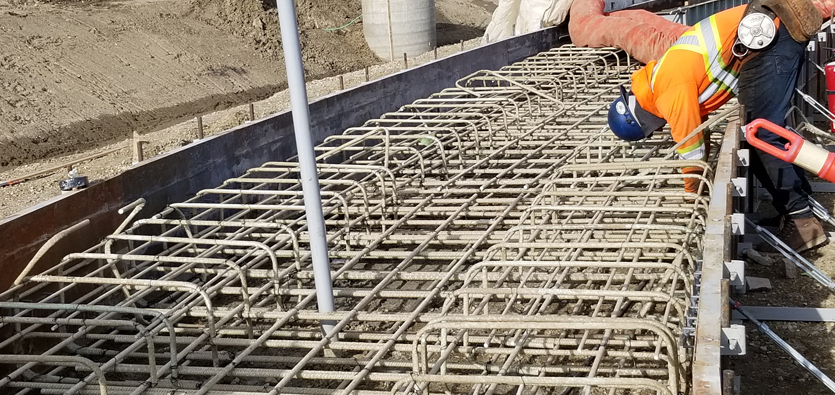
GFRP can be used for a broad range of new construction applications which include transportation infrastructure, rail LRT, runways, IT and research facilities, mining and tunneling, buildings, and waterside concrete structures such as retaining and sea walls.

Waterside structures such as water treatment facilities and drainage systems must be reinforced with GFRP to protect the concrete against harsh environmental conditions. GFRP-reinforced drains don’t rust as they can withstand tensile stresses from freezing water. Composite drains are used by many states because of their strength and durability. The long-term durability in saltwater provides GFRP a clear advantage over conventional steel.

About TUF-BAR

As a proud member of the American Composites Manufacturers Association (ACMA), TUF-BAR has been striving to produce the highest quality GFRP construction reinforcement products which are designed to build new concrete structures and rehabilitate existing ones. Visit our website for more information!

GFRP in Bridges – A Favorable Solution For The Environment

GFRP in Bridges - A Favorable Solution For The Environment

Sustainability and taking care of ecology play a vital role in modern civil engineering. Remarkable progress in the field of engineering and material science allow the construction industry to take a new direction and replace the conventional building materials with glass fiber-reinforced polymer (GFRP) to meet the growing challenges.

More than 25% of composites produced globally are applied in the construction industry. GFRP construction materials are developed mainly for bridge infrastructure. So far as history is concerned, composite materials (FRPs) were first applied in strengthening and rehabilitation applications. The use of composite materials in civil engineering have been largely developed for bridge structures.

After the use of composites as effective rehabilitation materials, GFRP began to be used as a maintenance-free, environment-friendly, and cost-effective construction material for new projects. The construction industry has started realizing that GFRP is an economically viable substitution to steel. GFRP-reinforced bridges can withstand the aggressive marine environment without being heavily maintained. One of the examples of rehabilitation is the replacement of damaged or degraded decks in aging steel-reinforced concrete bridges.

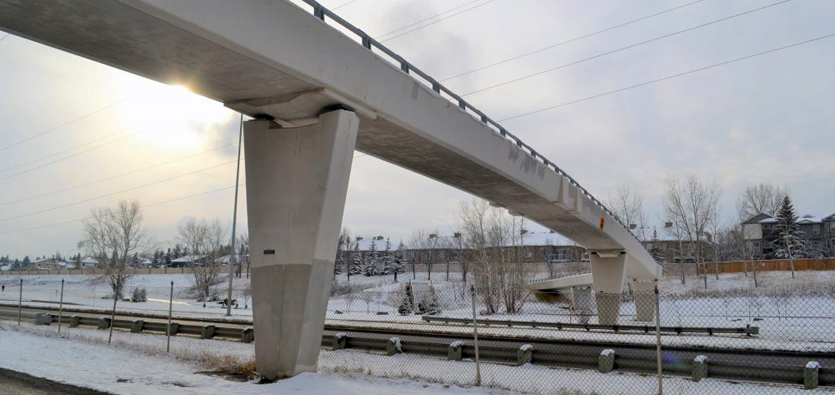
Replacing degraded bridge decks with GFRP-reinforced decks can help engineers obtain less weight of a structure. The first composite pedestrian bridge was built in Tel Aviv in 1975.

GFRP reinforcement is being increasingly used in structural applications due to its unique properties such as high strength and stiffness, and low volume to weight ratio. Building sustainable highway infrastructure is of utmost importance and mechanical properties are not the only parameters of construction materials that play an important role in construction.

Environment-friendly construction solutions

It is important to study the viability of a material in terms of its potential impact on the environment. In order to thoroughly study the impact of composites on the environment, it is necessary to evaluate the entire life cycle of a structure. From production and application to the end of service life, there are various phases and activities that can create environmental concerns. Material transportation, traffic disruption, the manufacturing process, and construction activities are some of the factors that can determine the feasibility of structural materials.

GFRP composites, such as fiberglass rebar, are ideal materials when evaluated from an environmental perspective. Minimum traffic disruptions, ease of transportation and installation, and corrosion-resistance make GFRP a sound alternative to steel.

The civil engineering community must increasingly use GFRP as an advanced construction material for bridges in order to minimize maintenance costs and make bridges more ecological.

About TUF-BAR

TUF-BAR has been manufacturing and selling the highest quality GFRP construction solutions which not only provide high strength and corrosion-resistance but also ensure environment-friendly construction processes. As a member of the Canada Green Building Council, we strive to help the construction industry in North America build sustainable concrete infrastructure. Browse through our site to learn more about our GFRP products and specifications!

Highway Infrastructure And Viability Of GFRP Materials

Highway Infrastructure And Viability Of GFRP Materials

Highway infrastructure deteriorates over time via heavy loads, poor maintenance practices, harsh environments, and insufficient maintenance. The excessive use of sodium chloride in winter and natural corrosive elements result in the corrosion of steel reinforcement and coating used to protect rebar. Low construction budgets, increased traffic volume, and complicated roadway construction areas put a strain on the properties of traditional materials to meet the need for lightweight, easy-to-maintain, sustainable, and rapid construction.

Glass fiber-reinforced polymer (GFRP) materials, which are being used in military and aerospace applications for many years, have been developed into sustainable and cost-effective construction solutions for the highway community’s infrastructure needs. One of the reasons why bridges and roads should be reinforced with composites is the ability of GFRP to effectively encounter the shortcomings of traditional materials such as steel.

Sufficient progress has been made in an attempt to start the widespread application of GFRP to highway infrastructure. It is understandable that the construction industry has to make sure whether or not GFRP technology holds to promise. Nevertheless, the superior properties of composite materials lead to widespread use of GFRP construction products in transportation infrastructure applications.

While it is an established fact that composites can dramatically increase the service life of highway infrastructure, it is important to determine how GFRP reinforcement and other materials can be best deployed. A significant amount of studies and research has been conducted to investigate the durability of GFRP in highway infrastructure applications.

Reinforced concrete bridges are supposed to maintain their function and service over a long period of time. GFRP is the only material that can help bridge owners build structures that can achieve or exceed the service life of 100 years. On top of that, GFRP composites don’t require heavy maintenance or repair to maintain their strength and performance. From variable loading to extreme weather conditions, GFRP-reinforced structures can withstand tough conditions and enable engineers to build long-lasting concrete members.

Because of many beneficial properties, GFRP materials offer a promising solution for a number of longstanding structural issues such as corrosion and expensive maintenance. GFRP fiberglass rebar has a high strength-to-weight ratio and excellent fatigue resistance, and it is not affected by the aggressive highway environment. Reduced overall life-cycle cost is one of the top reasons why the construction industry should start using GFRP rebar as a dominant choice for concrete reinforcement.

TUF-BAR has been striving to identify the most promising applications of GFRP materials. We also work actively towards developing a strategic plan for guiding the implementation of GFRP in various highway and waterside applications. Visit our website to study the specifications of our GFRP fiberglass products!

Retrofitting Of Concrete Structures With Composite Materials

Retrofitting Of Concrete Structures With Composite Materials

Reinforced cement concrete is used extensively for building various types of civil engineering structures. Throughout the 20th century, many concrete structures such as bridges, industrial structures, buildings, water facilities, and transportation structures were built using a huge investment into resources. It is critical to maintain and keep existing concrete infrastructure in good working condition. This is where structural rehabilitation comes into play. In order to deal with the deterioration of concrete, it is important to use the right rehabilitation materials and methods.

Rehabilitation of existing structures

With the growing demand and rapid development of modern industrial and public structures, the demand for sustainable retrofitting and strengthening solutions is increasing. Some of the situations where strengthening is required include:

Upgrading of structures, especially bridges, that yield forces beyond the existing capacity. For example, a dramatic increase in traffic volume leads to increased load levels. Also, there is a growing need for designing critical concrete structures that can resist earthquakes.

The effect of aggressive environments in the form of corrosion is probably one of the biggest reasons why concrete structures require rehabilitation in order to maintain their original strength and achieve their expected service life.

The construction industry often updates structures in terms of design to meet emerging needs. Changes in the structural system scheme such as new openings in walls or slabs or new position of columns are possible with various strengthening techniques instead of rebuilding a structure to facilitate intended changes.

Ideal rehabilitation material for concrete structures

Corrosion of steel reinforcement is one of the reasons why concrete structures need maintenance and rehabilitation. It is not an effective way to rehabilitate existing structures with traditional materials. Composite materials such as GFRP fiberglass rebar is one of the best materials to improve the strength and performance of structurally deficient structures. Stripes or plates made of composite materials bonded to the tensile face of the structure is one of the rehabilitation techniques. Here are some reasons why composite materials are ideal for retrofitting, strengthening, and repair:

Lightweight: Composite materials are easy to transport and install with less workmanship and equipment as compared to heavy steel. Ease of handling can save money and time.
Corrosion resistance: Composite materials are inherently corrosion-resistance and durable. These properties are in high demand when it comes to building or retrofitting concrete structures.

Retrofitting during operation: It is possible to carry out a strengthening process while the structure is in use. For example, a bridge can be rehabilitated with composite materials while it is still operational. On the other hand, retrofitting with traditional materials is usually done when the structure is out of service.

About TUF-BAR

TUF-BAR provides high quality GFRP fiberglass rebar which can be used for both new and rehabilitation applications. Visit our website to read more about the specifications of our composite construction products!