Blog

Concrete Deterioration and Emerging Solutions

Concrete Deterioration and Emerging Solutions

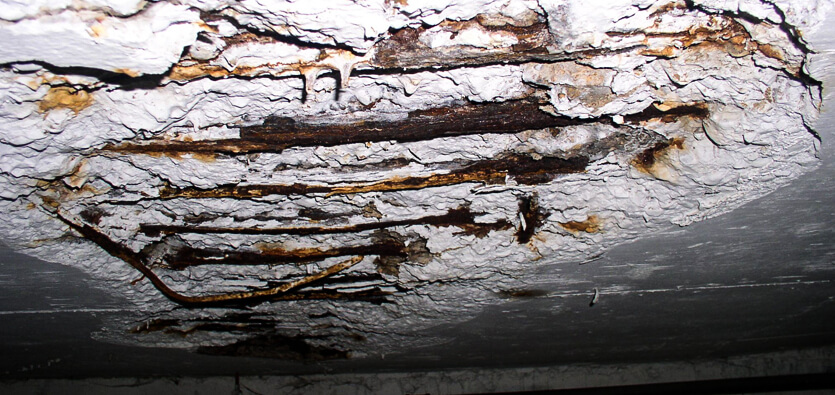
FRP materials have turned out to be a durable solution to some of the long-standing challenges of civil engineering. Concrete deterioration, for instance, is one of the major problems the construction industry has been facing for decades. The useful service life of a concrete member usually depends on the corrosion rate of reinforcement. A structure starts corroding when aggressive elements such as chlorides and carbon dioxide penetrate the concrete and reach the embedded reinforcing steel. Corrosion of concrete reinforcement costs the construction industry billions of dollars every year.

A concrete structure may deteriorate due to inadequate maintenance, construction errors, and design. As mentioned earlier, the most common cause of deterioration in concrete infrastructure is corrosion of traditional reinforcement. Freeze-thaw attack, carbonation induced corrosion, and alkali-silica are also notable causes of deterioration.

There is a need for thorough investigation of existing deterioration so that a maintenance and rehabilitation strategy can be developed. There are specialized engineering companies which conduct investigation programs. On-site surveys and testing of materials are two major components of such investigation. The process involves detailed observation and documentation of the structure’s condition, with attention paid to the structural changes, expected service life, typical conditions and a brief survey of the structure’s environment.

During the last three decades, structural engineers and contractors have developed many repair and protection techniques. However, all of the techniques are designed to meet short-term needs. There is a difference between structural rehabilitation and protection against deterioration. The repair process involves the removal of rusted concrete, preparation of reinforcing steel and repair cavity. It is a complex task that involves the selection, placement, and curement of the repair material.

Despite the extensive research and development of several rehabilitation techniques, structural engineers are still struggling to find materials that can provide long-lasting deterioration solutions. Traditional steel cannot provide concrete structures with adequate protection against harsh environmental elements. Structures subject to corrosive environment demand corrosion-free reinforcement materials.

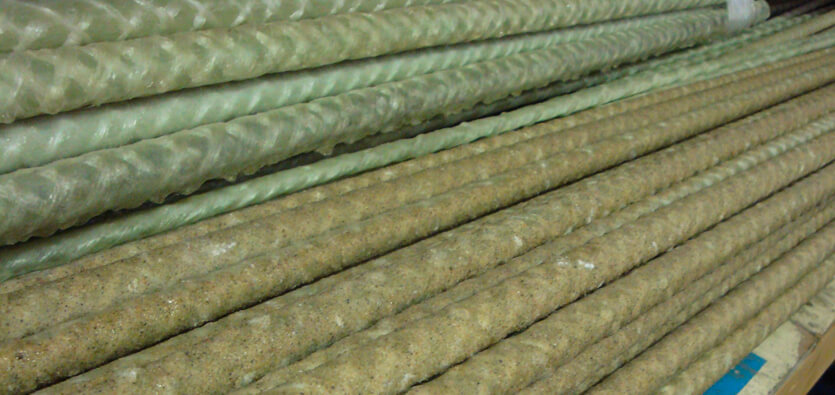
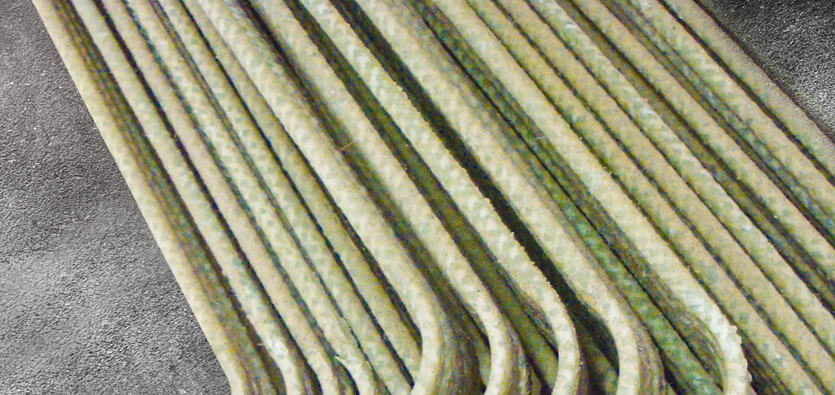
FRP composites have shown promising results in applications where strength, deterioration and non-conductivity are prime concerns. They have emerged as a potential solution to corrosion and other deterioration issues. Fiberglass rebar, for example, is an FRP construction product which offers corrosion-resistance, high strength-to-weight-ratio, ease of installation and other advantageous characteristics. Developed countries such as Canada, the US, and Japan have already developed design codes, guidance on the engineering, and construction of concrete members with FRP composites. This guide is a result of worldwide research and analytical work, and field applications of FRP bars.

GFRP construction materials clearly outsmart traditional materials when it comes to corrosion-resistance, durability, maintenance, and strength. This is why the structural engineers are now increasingly accepting GFRP composites as a strong alternative to conventional steel.

TUF-BAR is a proud manufacturer and seller of fiberglass bars and other durable construction products such as rock bolts, concrete anchors, and form ties. We produce high-quality GFRP reinforcement for both new and rehabilitation applications. Sea walls, dams, water tanks, bridges, buildings, research facilities, and parking garages are some of the major applications of our fiberglass rebar. Visit our site to know more about our products and see how our sustainable construction solutions can extend the service life of your next project.

FRP Composites And Bridge Design Objectives

FRP Composites And Bridge Design Objectives

A construction material must adapt to the culture and demands of civil engineering community in order to be successfully implemented. FRP composites, undoubtedly, have gained considerable acceptance and popularity in bridge engineering. How can advanced composite materials (FRPs) address the longstanding deterioration problems associated with highway infrastructure?

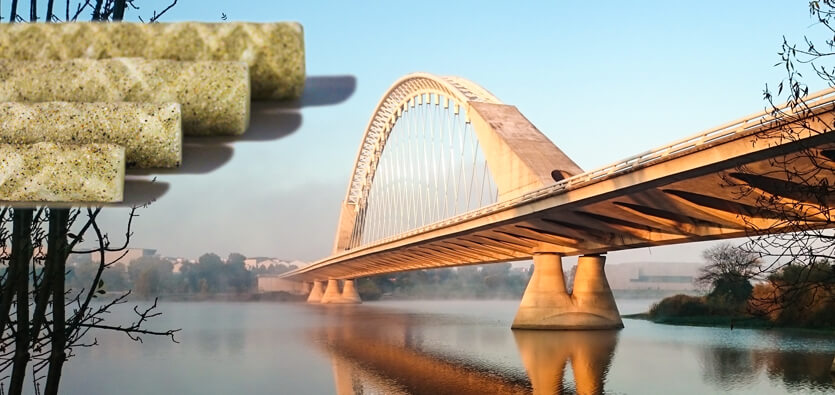
We know that bridges and waterside concrete structures have been deteriorating for many years. The ongoing rehabilitation process is very expensive, however, necessary to keep the existing structures in an operational condition. The FRP composites have turned out to be potential reinforcement materials that can help the construction industry eliminate deterioration related problems permanently and achieve long-term objectives in a cost-effective manner.

The worldwide highway infrastructure is subject to severe environmental conditions, corrosion of steel beams, heavy loads, wrong maintenance practices, etc. It is an established fact that conventional materials cannot satisfactorily meet the public need for durable structural components, rapid construction, and inexpensive maintenance. The construction industry needs FRP composites more than ever because FRP’s strength meshes with the shortcomings of widely used traditional materials. Following are some of the major bridge design objectives and techniques to achieve these objectives:

1. Safety comes first

Constructing safe infrastructure must be the top priority of bridge designers. Bridge collapses occur but they are absolutely unacceptable. A large amount of taxpayers’ money is allocated to build and maintain safe public infrastructure. FRP composites have been studied and tested extensively in terms of safety of durability. The result demonstrates that, if implemented and designed properly, FRP can exhibit strength in excess of what is required.

2. Serviceability

Researchers have carried out extensive accelerated laboratory durability tests to determine whether or not FRP composites are capable to withstand harsh highway bridge environment. The result showed that FRP technology has the potential to provide bridges with adequate durability and strength both in new and rehabilitation applications.

3. Constructability

There is no doubt that FRP is an inherently lightweight material. Advanced composites such as GFRP rebar offer high strength-to-weight-ratio which makes the fabrication and erection process smooth without additional stress and difficulty. We know that the ease of construction and transportation can minimize production cost of a project and enable engineers to complete a project quickly without causing indirect social costs.

4. Economy

In some cases, it become difficult to achieve economical bridge designs with advanced composites. The initial high cost of FRP reinforcement and competitive bidding process make it difficult to construct FRP-reinforced highway bridges without subsidy. This is probably one of the main reasons why composite materials are still struggling to dominate the rebar market. It is important to consider that factors such as ease of construction, improved durability, and low life-cycle costs offset the initial high cost of FRP components.

There are some other bridge design objectives which include inspectability, deformation, and aesthetics. Conclusively speaking, FRP composites such as GFRP fiberglass rebar have the potential to meet and exceed the requirements and expectations of the construction industry.

About TUF-BAR

At TUF-BAR, we develop and produce the highest-quality fiberglass rebar and accessories which are stronger and lighter alternative to conventional steel products. Our focus is to produce construction products that can extend the life of concrete structures up to 100 years without spending heavily on maintenance activities. Feel free to discuss your project with us!

GFRP Rebar: A Perfect Alternative To Traditional Reinforcement

GFRP Rebar: A Perfect Alternative To Traditional Reinforcement

The construction industry has been using steel as a reinforcing medium in concrete members for over 100 years. However, steel fails to perform as expected especially where structures have been exposed to the harsh environment such as wastewater treatment facilities, bridges, chemical plants, and marine structures. Researchers have already tested many techniques to prevent the corrosion of steel reinforcement.

The use of epoxy coating and admixtures to improve impermeability are two examples of corrosion prevention techniques. The civil engineers have witnessed premature corrosion of epoxy-coated bars in bridges and other sensitive concrete members. The localized corrosion of the epoxy-coated bars makes the situation even worse as localized corrosion penetrates deeper into the bar rather than spreading on the surface.

Glass fiber reinforced polymer (GFRP) rebar has turned out to be a sustainable corrosion solution, a promising alternative to conventional reinforcing bars for concrete members. GFRP rebar is non-corrosive, lightweight, has high tensile strength, and offers high strength-to-weight-ratios. Taking into account the significant rehabilitation costs associated with the deterioration of existing bridges, which is mostly a result of steel reinforcement corrosion, the corrosion resistance property of GFRP rebar can offer significant value to RC members.

Related: The Application of GFRP Bars in Water Facilities: A Case Study

Following the promising characteristics of modern composites, the civil engineering community has accelerated the use of GFRP bars in many crucial applications: bridge decks, pavements, water treatment facilities, seawalls, and other systems where corrosion is the major structural challenge. Some of the proposed applications of FRP composites involve the replacement of conventional materials with composite materials. Apart from regular applications, advanced composites are ideal materials to be used in the rehabilitation activities.

It is hard for structural engineers to select a material by considering data based on short-term exposure duration. However, with the passage of time, the construction industry will have long-term performance data of GFRP materials embedded in concrete. The availability of reliable in-practice data will strengthen the position of advanced composites in the rebar market.

GFRP reinforcement provides many potential advantages to the constructors and owners. A number of studies have been conducted on this subject to investigate the applicability of advanced composites in constructing durable civil structures. Despite the widely reported advantages, the growth and acceptance of GFRP rebar has been largely hampered by the insufficient long-term performance data.

TUF-BAR is one of the companies that produce the highest-quality GFRP rebar in Canada and the United States. Our objective is to explore and materialize the true potential of composite materials and make them economically viable for the construction industry. Our products include GFRP rebar, form ties, rock bolts, and concrete anchors. Our fiberglass rebar and accessories are specified for use in bridges, dams, concrete slabs, barrier walls, tunneling and temporary reinforcement, roadways and other structures which should remain free of electromagnetic disturbances. Contact us to know more about our modern construction solution!

Advanced Composites For Rehabilitation Of Structurally Deficient Concrete Infrastructure

Advanced Composites For Rehabilitation Of Structurally Deficient Concrete Infrastructure

The repair of structurally deficient, damaged, and substandard civil infrastructure has become a critical issue for the construction industry worldwide. The developed countries such as the US and Canada completed most of their infrastructure in the latter half of the 20th Century. This is why the rehabilitation of existing concrete members is fast growing in the developed part of the world. Since the 1980s, the realization of the importance of specific material properties: stiffness, weight, resistance to corrosion, ease of installation, tailorability, and durability is encouraging the use of advanced composite materials (FRP) in the rehabilitation of structures.

Fiber reinforced polymer (FRP) composites are now widely used to rehabilitate reinforced concrete members. FRP or advanced composite materials have shown tremendous potential for use in civil engineering applications because of their attractive characteristics: corrosion-resistance, light weight, durability, and high strength-to-weight ratio. The application of advanced composites in the renewal of existing RC structures such as bridges, roads, waterside buildings, etc. is of great significance. Over the past few years, their use has been increased in the rehabilitation activities due to low lifecycle costs, ease of installation, and tailorable performance properties.

The civil structures are generally designed to have a service life in excess of 100 years. However, some structures fail to meet the changing requirements as a result of the change in the use and condition of a structure which can include:

  • Increased live and dead load
  • Modern design practice
  • New loading requirements
  • Change in load path
  • Construction errors
  • Structural degradation

Corrosion is the most common phenomenon that leads to structural degradation, especially where a structure is exposed to an aggressive environment.

The costs of rehabilitation materials are usually less important as the rehabilitation process involve societal and labor costs. The initial cost of FRP composites can be high. However, the high initial cost of these innovative materials can be offset by increasing the speed of construction, reducing labor cost and traffic disruption. Lightweight and easy-to-install materials enable civil engineers to complete projects quickly without causing heavy indirect costs.

The use of advanced composite materials to repair or upgrade concrete members offers two major benefits: quick completion of project and durability. The durability factor is not given much importance as rehabilitation activities are meant to serve short-term objectives. The relative ease of material handling leads to reduced construction time and cost. In other words, the rehabilitation of deteriorated concrete structures with FRP composites lowers indirect costs.

Over the past two decades, the sophisticated manufacturing techniques have helped GFRP manufacturers produce high-quality construction products with minimal voids and accurate fiber alignment. The growing acceptance and the development of new design codes reflect that these innovative materials have the potential to build and maintain sustainable concrete infrastructure in a cost-effective manner. The capacity of advanced composites to extend the life of old or damaged structures with minimum disruption to users makes for genuinely sustainable construction solutions.

TUF-BAR, a member of Canada Green Building Council, designs and produces the highest-quality GFRP fiberglass rebar and accessories in Canada and across North America. Our goal is to deliver sustainable construction materials that can permanently resolve structural problems associated with concrete deterioration and strengthen the overall concrete infrastructure. Contact us to know more about our fiberglass reinforcement products!

Composite Construction Materials: Sustainability And Long-Term Durability

Composite Construction Materials: Sustainability And Long-Term Durability

As a result of the need to rehabilitate the existing structurally deficient concrete structures, composite construction materials have gained growing acceptance as they have the potential to increase the usable life of the concrete members and help civil engineers construct infrastructure systems faster. Increased attention towards a sustainable built environment has driven the construction industry to utilize new promising materials as an alternative to traditional materials. Extensive research has been conducted on FRP composites as an effort to identify the specific challenges associated with advanced composite materials and their applicability in a sustainable environment.

In order to meet the challenges and emerging structural requirements, it is inevitable to think beyond financial constraints and performance criteria. The construction industry in developed countries such as Japan, Canada, and the US now considers environmental factors, energy consumption, and social factors in order to select sustainable and environmentally-friendly building materials. As a result of this approach, FRP systems are increasingly being considered to build and rehabilitate concrete members subject to harsh environmental conditions.

FRP composites are corrosion-resistant, lightweight, easily constructed and demonstrate high strength and stiffness. They offer the architect unlimited design flexibility because of their molded shape potential. Taking into account these advantageous characteristics, FRP composites are used as external and internal reinforcement in concrete members. The exquisite properties of FRP materials have been reported in the literature. However, more work needs to be done to determine the feasibility of FRP materials within the framework of a sustainable environment.

It is important to define sustainability before we could move forward to evaluate the sustainability of advanced composites. The idea of sustainability stems from the concept of sustainable development. According to a report published by Brundtland Commission, “sustainable development meets the needs of present without compromising the ability of future generations to meet their own needs”.

Evaluation of the environmental impact of FRP composites in infrastructure applications shows direct and indirect benefits that are more competitive than conventional materials. The environmental impact of FRP composites should be studied in terms of its advantages such as:

  • High tensile strength
  • Corrosion resistance
  • Higher performance
  • Rehabilitation and seismic enhancement application
  • Lightweight: ease of installation
  • Ability to recycle
  • Extended usable life

It is critical to consider the fact that the selection of FRP reinforcement cannot be governed entirely by the social, environmental, and economic impacts of the material; rather, the selection of FRP materials should be subject to its ability to reduce the overall life-cycle costs. It is now an established fact that composites enable concrete infrastructure to achieve long service life without costly repairs and maintenance.

FRP reinforcement materials such as rebar have developed greatly since they were first introduced. GFRP fiberglass rebar is one of the finest forms of advanced composites available in the market.

TUF-BAR is a leading producer of GFRP reinforcement in North America where our focus is to manufacture environment-friendly and sustainable construction products as an effort to help achieve sustainable development. We maintain strict controls to ensure that our fiberglass rebar and accessories are compliant with CSA and ACI building codes. Visit our site for more information!

Developments on GFRP Rebar as Internal Reinforcement

Developments on GFRP Rebar as Internal Reinforcement

Over the last two decades, fiber reinforced polymer (FRP) concrete reinforcing bars have been tested and investigated extensively. As a result, we can find a variety of commercially available FRP bars. TUF-BAR GFRP rebar, for example, is one of the finest concrete reinforcement products available in the composite market. Unfortunately, many practicing structural engineers are unfamiliar with the use of GFRP bars as internal reinforcement in concrete structures. The blog post will discuss the efforts made on the evaluation of GFRP bars as internal reinforcement in concrete slabs, columns and beams.

FRP composites have gained a growing worldwide acceptance in the construction industry. These materials are designed using strong fibers embedded within a light polymer matrix. Composite materials have become popular because of their attractive properties: high tensile strength, corrosion resistance, environmental stability, and excellent bond strength.

It is highly recommended to use GFRP for structures that operate in severe environmental conditions. Currently, the corrosion of steel reinforcement in waterside concrete infrastructure has been a major concern. The construction industry has already tried many techniques to overcome steel corrosion, but these techniques always proved to be expensive short-term solutions.

GFRP rebar as beam reinforcement

An experimental comparison was conducted between the deformed steel bars and the composite bars in terms of load carrying capacity, cracking behavior, flexural rigidity, and strain distribution. The results concluded that there was a perfect bond between composite bars and the concrete and that the strength of GFRP reinforced beams was greater than that of beams reinforced with steel.

GFRP rebar as column reinforcement

The behavior of GFRP bars as longitudinal reinforcement for concrete structures has been investigated in a number of studies. It has been established that GFRP transverse reinforcement can increase the toughness, strength, and ductility of the column due to the effective confinement of the concrete core.

The strength of GFRP reinforcement

In 2004, ISIS Canada conducted a study on the durability of GFRP reinforcement in concrete. Concrete structures in service for 5 to 8 years were considered for the study. All the chosen concrete structures have been subjected to harsh environmental conditions. The study concluded that there was no sign of deterioration of the GFRP in the structures exposed to the corrosive environment for up to 8 years.

The study further revealed that de-icing salts, freeze-thaw cycles, and wet-dry cycles have no adverse effect on the reinforcement. Since fiberglass rebar requires minimum maintenance, structures built with GFRP reinforcement are likely to achieve service life of up to 100 years. The incredible results produced by GFRP rebar provided the authorities with confidence to allow the use of GFRP as primary reinforcement of concrete structures.

The use of FRP composite materials should be encouraged to get rid of expensive and widespread steel corrosion and rehabilitation. The construction industry has to adopt corrosion-free construction solutions in order to build a better future. TUF-BAR, a leading GFRP fiberglass rebar manufacturer in North America, strives to produce rust free, strong, and durable construction materials for a number of diverse construction applications. Visit our site to know more about our products.