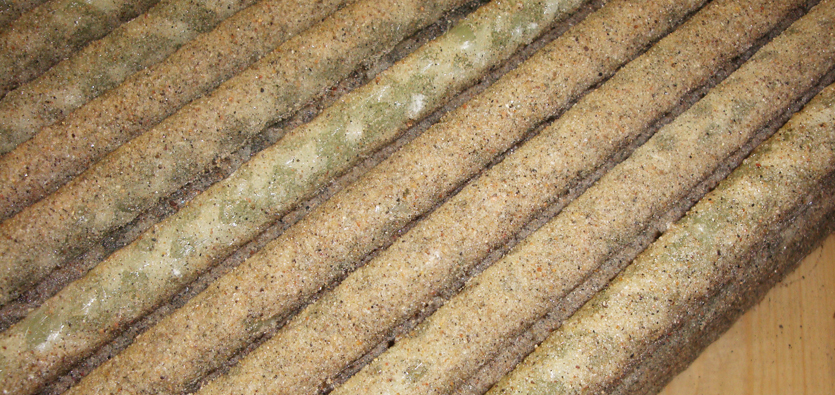
Why Choose GFRP Fiberglass Rebar?

Fiberglass-Rebar

There is no denying the fact that glass fiber reinforced polymer (GFRP) technology offers many advantages over traditional materials such as aluminum and steel. One of the biggest benefits of composite construction products is long service life and reduced maintenance cost of ownership over the life cycle of a concrete structure. This blog post will provide a brief overview of the following major benefits of GFRP reinforcement:

Corrosion-free concrete structures

Fiberglass rebar is designed to withstand some of the toughest environments including industrial waste and sea water. It is certainly an economically viable choice for the construction industry considering the rising rehabilitation costs of steel-reinforced structures. Unlike steel, fiberglass rebar does not corrode and requires minimal maintenance to achieve long service life.

Concrete structures such as water treatment facilities and bridges are subject to perpetual environmental pressure. It is a challenge for engineers to build these structures with sustainable materials while remaining within budget. Fortunately, the continuous technological advancements, long-term strength and cost-effectiveness make fiberglass rebar an ideal choice for critical civil engineering applications.

Low transportation and installation costs

Fiberglass rebar is an inherently lightweight construction material which does not require heavy equipment during the transportation or installation process. These characteristics of being lightweight material enables project management teams to save time and money. Quick delivery of project materials puts less burden on the public. For example, a deteriorated bridge can be rehabilitated with GFRP in a time-efficient manner. When compared to traditional steel, fiberglass rebar is ¼ the weight of steel and delivers 2x tensile strength.

Zero maintenance

Billions of dollars are spent every year to maintain existing, structurally deficient concrete structures. More than 55,000 bridges in the US are structurally deficient and in need of repair or replacement. The major reason why these structures have deteriorated before reaching their expected service life is the corrosion of steel reinforcement. GFRP-reinforced structures do not require maintenance or any major rehabilitation activity. The widespread use of GFRP reinforcement can save the world billions of dollars every year.

Electromagnetic neutrality

The non-magnetic properties of fiberglass rebar make the material ideal for many sensitive applications such as research, medical and IT facilities.

Traditional reinforced concrete is used in the construction industry largely due to low initial cost and vast experience of its use in practice. However, we need to implement innovative construction materials such as fiberglass rebar in order to build more sustainable and cost-effective concrete infrastructure.

TUF-BAR is one of the leading GFRP fiberglass rebar manufacturers in North America. We produce the highest quality fiberglass rebar, a lighter and stronger alternative to traditional steel rebar. Visit our site for more information!

GFRP Composite Materials: Mechanical Properties And Durability

Mechanical-Properties-And-Durability

The elements which influence the mechanical properties of GFRP composites include fiber type, matrix, relative quantities of the constituents and the orientation of the fibers. The quality of the interface between the matrix and the fiber also has a major impact on the mechanical properties of the GFRP. In addition, the post-curing and curing system can have an impact on the final properties of composite materials.

Ultimate tensile strength, stiffness and creep, uniaxial compressive strength, and compressive strength are some of the mechanical properties of GFRP construction materials.

The unique mechanical properties of GFRP composites make these materials ideal for building and strengthening of RC structures. Over the last decade, GFRP reinforcement and other composite materials have gained unprecedented popularity because of their ability to resist corrosion and resolve long standing structural issues.

The mechanical and physical properties of fiber-reinforced materials are studied with an emphasis on the potential application of these materials as durable concrete reinforcement.

Waterside concrete structures are often exposed to corrosive environments such as thermal cycle, salt, moisture, etc. To ensure the structures can survive the corrosive elements and achieve their expected service life, it is important to study the behavior of GFRP reinforcement with regard to environmental parameters.

GFRP materials are being widely accepted as a sustainable alternative to traditional concrete reinforcement because of the capacity of GFRP technology to extend the service life of structurally deficient structures and build durable concrete structures that can resist chemicals, weather, and abrasion while requiring minimal maintenance.

Different concrete structures demand a different level of durability based on the desired service life and the exposure environment. For instance, a retaining wall exposed to seawater will have different requirements than a building which is not subject to water or moisture. A seawall demands a protection shield against corrosive seawater which can deteriorate any structure rapidly. GFRP fiberglass rebar is the ideal reinforcement material to build waterside concrete structures.

Steel and other metals have isotropic properties which means they offer equal strength in all directions. A GFRP composite material offering anisotropic properties provides additional reinforcement in the direction of stress creating more durable structures at lighter weights.

The degradation of concrete is important to consider because the extensive degradation leads to decreased load carrying capacity. The durability of a concrete structure reinforced with fiberglass rebar largely depends on fiber, resin, fiber/matrix characteristics, manufacturing process, loading type and the nature of the environment. GFRP reinforcement remains effective against many environmental factors: mainly moisture, chemical substances, temperature, UV and ozone, creep, fatigue and water.

TUF-BAR is a leading manufacturer and supplier of superior quality GFRP rebar and accessories in North America. Visit our site to learn more about the characteristics and applications of our GFRP products!

An Overview Of GFRP Construction Materials

GFRP-Construction-Materials

Fiberglass rebar has been a preferred construction material for concrete reinforcement in Canada and across North America due to its superior resistance to corrosion, high strength-to-weight ratio, excellent fatigue performance, and electromagnetic immunity.

Apart from general requirements for proper operation and bearing capacity provision, RC structures of civil and industrial buildings are required to meet specific requirements such as magnetic and radio transparency, corrosion resistance, dielectric resistance, minimum maintenance, etc. There is only one solution to provide concrete structures with these characteristics and that is the implementation of innovative fiberglass construction materials. However, lack of experimental and in-practice data is a hurdle in the way of widespread use of composite materials.

Concrete has long been used as a fundamental construction material for its superior compressive strength and low cost. However, its limited tensile strength and brittleness are major drawbacks. To overcome these drawbacks, engineers have been using steel reinforcing bars. Steel bars, however, have their own own disadvantages: susceptibility to corrosion when exposed to the harsh environment and higher maintenance cost. When steel corrodes, it leads to rapid deterioration of concrete. A number of technologies such as coatings and penetrants were introduced to resolve this problem. Unfortunately, none of these corrosion preventive measures provided sustainable solutions.

There are many reasons why the widespread use of GFRP reinforcing bars make sense considering the annual rehabilitation costs of steel-reinforced concrete structures. The ability of GFRP rebar to withstand harsh environments make it ideal for applications where water is present, such as retaining walls, decks, piers, pools, offshore structures, roadways and bridges, airport runways, etc. In addition, electromagnetic neutrality makes GFRP rebar a good choice for rail LRT, research facilities, and other sensitive applications where metallic construction materials can be problematic. Composite materials also provide solid resistance to a number of chemicals found at water treatment facilities, cooling towers, solid waste sites, paper mills, water tanks, and chimneys.

High tensile strength is another advantage of GFRP rebar which makes it an excellent counterbalance to concrete high compressive strength. Excellent fatigue resistance makes GFRP reinforcement ideal for cyclic loading situations. When we compare GFRP with steel, it is approximately one fourth the weight of steel. The inherent lightweight properties of GFRP enable the construction industry to complete projects quickly without spending much time and money on transportation and installation of reinforcement. Steel, on the other hand, is a heavy construction material which requires heavy equipment during the installation and transportation process.

The initial cost of composite materials can be higher than steel; however, when we take the life-cycle cost into account, composite materials are cost-effective as they offer long service life and require minimum maintenance.

What we do

We have been producing and selling premium quality GFRP rebar, a superior alternative to traditional steel rebar, and accessories in Canada, across North America and throughout the world. As a proud member of Canada Green Building Council, our objective is to develop composite materials in a way that they contribute towards sustainable concrete infrastructure. Visit our site to have a look at the properties of our fiberglass rebar, rock bolts, form ties, and concrete anchors.

The Environmental Cost Of Rebuilding Concrete Structures

Rebuilding-Concrete-Structures

Rebuilding concrete structures has serious consequences for the planet. Concrete is one of the largest contributors of carbon dioxide emissions. The production of cement is alone responsible for about 5 percent of global carbon dioxide emission. Concrete also presents a large portion of demolition waste and construction, a third of all landfill waste. It is costly and difficult to recycle concrete; recycling also reduces concrete’s strength.

At the same time, concrete infrastructure plays a critical role in the development of an economy. For example, we know how important it is for a country to have state-of-the-art transportation infrastructure. In North America and across the globe, the construction industry has to build sustainable concrete structures in order to reduce concrete production. Constructing long-lasting and maintenance-free buildings, bridges, roads, and other concrete structures is the only way to reduce the environmental cost of rebuilding.

Concrete is widely considered as a stone-like, homogenous, and monolithic material. In reality, it is a complex combination of cooked limestone, sandy aggregates, and clay-like materials. It is critical to determine what makes concrete deteriorate so quickly without reaching its expected service life. The answer is steel reinforcement which is hidden but active inside. When corrosive agents penetrate through small cracks in concrete and reach the reinforcement, an electrochemical reaction occurs.

With one end of the steel bar tuned into a cathode and the other end an anode, the electrochemical reaction turns steel bars into rust leading to concrete deterioration. Rust increases the rebar size up to four time its original size. As a result of spalling, concrete fractures apart. When a bridge or a building becomes structurally deficient, it is either rehabilitated or rebuilt. Reinforcement corrosion in concrete causes cracking, reduction of bond strength, loss of serviceability and reduction of steel cross-section. Reinforced concrete experiencing corrosion not only indicates poor performance but, in extreme cases, loses its structural integrity.

We can conclude that the corrosion of steel reinforcement is the biggest reason why steel-reinforced structures fail to reach their expected service life. We need to change the way we recognize steel as a practical construction material. It’s about time we consider the environmental cost of building substandard concrete structures. We must act fast and avoid needless maintenance, pollution, public inconvenience, the cost to repair damaged concrete members, and the waste.

The history reveals the cost of short-term thinking. As a future-centric nation, we need to focus on building concrete structures that can stand the test of time.

Solutions

Composite materials provide us with the opportunity to build sustainable, corrosion and maintenance-free structures that can withstand harsh environments for at least 100 years. The construction industry in North America and across the globe should now increasingly implement innovative GFRP technology to build long-lasting and cost-effective structures.

About TUF-BAR

TUF-BAR is a top producer and seller of GFRP fiberglass rebar and accessories in North America. Our objective is to help the construction industry get rid of corrosion and other long-standing structural issues. Visit our website to learn more about our products and their applications!

Tariffs On Steel: Increased Construction Costs And Alternatives

Tariffs-On-Steel

The term ‘Trump Tariffs’ refers to the series of tariffs imposed on various goods during the presidency of Trump. In June 2018, the United States imposed a 10% tariff on aluminum and a 25% of tariff on imports of steel. The tariffs on aluminum and steel are likely to significantly increase steel prices making construction projects more expensive. The contractors will be absorbing the added cost making it difficult for them to maintain their profitability.

Raw steel is used for a number of construction applications including reinforcing steel bars in structural concrete and structural steel framing. Although the tariff will affect all steel products, the biggest impact will be on structural steel.

Raw material, fabrication, delivery, and erection on site are four components of the cost of structural steel. The steep rise in the price of steel will put pressure on construction pricing in the US. Rising costs of implementing traditional construction materials mean that contractors may find it difficult to increase their profits.

The new tariffs will lead to potentially dampen demand for new construction projects and significant harm to the country’s construction industry; It could put tens of thousands of high-paying construction jobs at risk. Rising prices of traditional materials means that contractors who have already signed fixed-price contracts but not bought steel products will have their profits entirely eliminated or reduced.

How the construction industry should respond

It is widely acknowledged that traditional construction materials like steel can’t be the materials of future because of their inability to meet emerging structural needs. In the past, the construction industry was reluctant to use innovative materials like GFRP rebar because of its relatively high initial cost. However; taking into account the skyrocketing prices of the steel; its inability to fight corrosion and high maintenance costs, the construction industry in the US and across North America must increasingly use advanced composite materials (FRPs) for building and rehabilitating concrete structures to not only fight the increasing prices of steel but also start building sustainable concrete infrastructure.

Alternative of steel rebar

When it comes to finding advantageous and cost-effective alternative to steel reinforcement, fiberglass rebar is the only option which offers high tensile strength, impeccable corrosion-resistance, ease of transportation and installation due to its inherent lightweight properties. It’s about time for the construction industry worldwide to start thinking about the long-term benefits of using modern and advantageous materials like GFRP fiberglass reinforcement for both new projects and rehabilitations applications.

Who we are

As a well-reputed manufacturer and distributor of GFRP rebar and accessories in Canada and across North America, TUF-BAR has been striving to produce construction materials that can meet the structural demands of the 21st Century and help the construction industry realize the need for sustainability. Contact us to learn more about our products and how they are better than traditional steel!

Glass Fiber Reinforced Concrete : Composition and Properties

Glass-Fiber-Reinforced-Concrete

Fiberglass reinforcement is oftentimes a confusing and misunderstood topic. The method to increase mechanical characteristics of a material is called reinforcement. Many engineers who understand material science have a deep knowledge and study of this engineer-friendly material. For many purposes, it is taught to engineering students because it is the most widely recognized form of reinforcement with fiber.

Composition

GFRC is glass fiber reinforced concrete and it is a composite. It is the equivalent to steel reinforcement as per convention. But better! It is a high strength fiberglass embedded in a complicated and cementitious matrix. While retaining their physical attributes and chemical identities, the combination of both fiber and matrix provides enhancement and strength, but when alone, they certainly would not provide the same result.

Properties

The properties of each function in such a way that; the fiber carries the load, while the matrix provides endurance and stability. When combined together, these two factors are able to handle very heavy loads, as well as prevent corrosive and chemical or weather erosion. GFRC is lightweight and durable which can be cast into multiple shapes along with textures and colors as desired. One of the major qualities is the strength both ingredients bring to the table. Both the high dosage of glass fibers and acrylic polymer give it tensile enhancement strength as less water to cement is used resulting in a lower cement ratio. It is far superior to regular concrete and offers higher flexural strength. Also, its designed to reinforce and bring durable stability to anything it casts in either concrete or GFRC. And thus, a great choice to be used in complex, 3D shells which are required to be light and sturdy.

Today, more manufacturers exist for this revolutionary market but have seen little growth in its share of market value. But it’s slowly gaining in popularity throughout the middle east, for example, for its thermal insulation. Across the globe, engineers have begun to understand how to use many other fiberglass reinforced materials like GFRP rebar such as the USA, Europe, and Asia. This change in attitude helps to understand the underlying capabilities of fiberglass and concrete with the future of construction and infrastructure.

History and application

GFRC was first used and originally developed in Russia but it wasn’t until the 1970s that saw it transform to its current state. First seen as lightweight facades, its applications have broadened to cater to infrastructural construction. GFRC is also manufactured to be utilized as panels and requires low maintenance. The nonstructural panels can withstand its own weight and other external factors such as weather and seismic anomalies which is why it’s used in a number of other architectural ornamental applications, restorations, and replacements, fireplaces, countertops and more.

Benefits

  • GFRC is extremely durable and can outlive steel reinforced concrete. It’s also safe and reliable.
  • Design Freedom. GFRC is made from mold-state so it can take up any shape and texture along with color.
  • Requires minimum to low maintenance.
  • Resistant to climate and fires.
  • Cost effective and economical.

Tuf-Bar specializes in the manufacturing of high-quality fiberglass rebar and accessories. With shipping worldwide, our products are made with strict controls and we ensure every product is in compliance with CSA and ACI building codes.