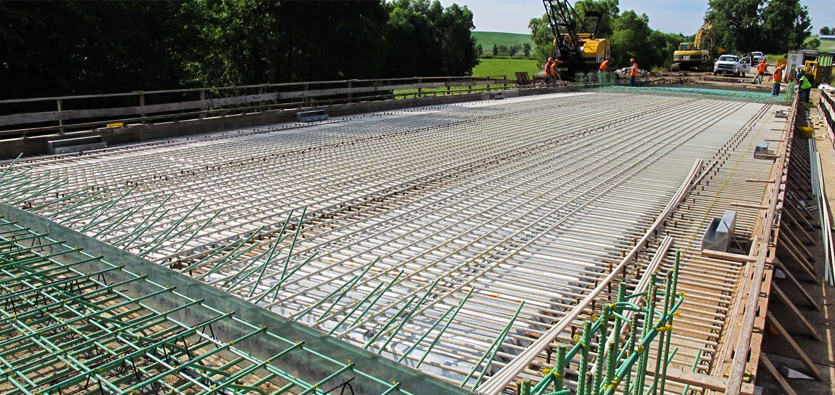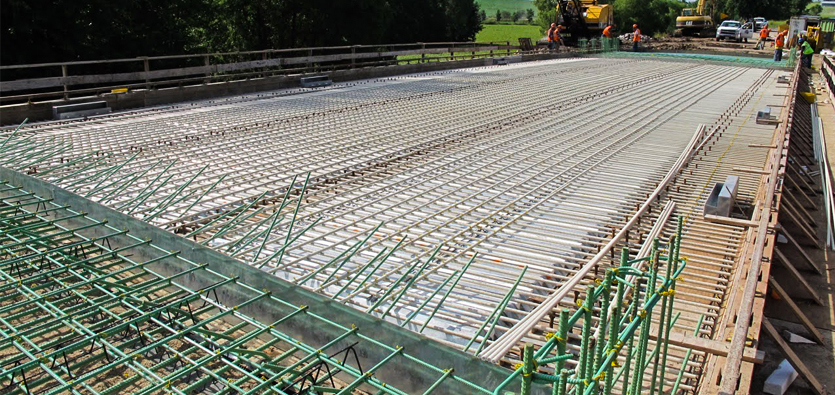
Construction And Installation of GFRP Rebar

Installation-of-GFRP-Rebar

The use of traditional construction materials and techniques is associated with complexities both in terms of installation and manufacturing. From delay in the opening of facilities to inconvenience for road users, traditional construction materials make it difficult to ensure quick project delivery.

GFRP or fiberglass rebar enables structural engineers to carry out fast, easier, and less expensive installation without creating too much inconvenience for the public. The use of glass fiber reinforced polymer (GFRP) rebar is tested to be the most promising solution to overcome concrete deterioration issues due to corrosion of traditional reinforcement materials.

The fact that composite materials are inherently lightweight and can be manufactured off-site and be assembled on-site using light equipment reduces the production costs in terms of installation and transportation; rapid construction reduces cost and inconvenience experienced by the traveling public. In addition, less noise pollution is produced and less fuel is consumed by slowing, stopping or detouring traffic.

When an old bridge is rehabilitated, it is taken out of service for at least 30 days so that concrete can be placed and cured. This could lead to traffic congestion and accidents. GFRP construction products provide economically viable and fast rehabilitation solutions. The lightweight composites also allow for transportation and installation in inaccessible and environmentally restrictive areas. Data has shown that the replacement of a structurally deficient bridge and installation of a new GFRP bridge structure can be achieved in a much more effective manner.

By implementing GFRP reinforcement instead of traditional reinforcement materials, the weight of the structure can be significantly reduced. Another benefit of using low weight GFRP composites is that excessive loading of long span bridges in terms of dead weight is eliminated enabling increased live load capacity which is advantageous considering the increasing traffic ratings.

Achieving accurate dimensions of the members is a common problem faced during construction with traditional building materials. GFRP rebar manufactured using the pultrusion process ensures full repetition of dimensionally accurate forms. The pultrusion process enables the manufacturer to produce high-quality fiberglass rebar which is ¼ the weight of steel and offers 2x the tensile strength.

GFRP reinforcement has been in service as complete load bearing superstructures and bridge decks in North America for over a decade. These concrete structures are performing exceptionally well and gaining significant popularity.

About us

TUF-BAR manufactures GFRP fiberglass rebar using the highest quality corrosion resistant vinylester resin and fiberglass materials. We also produce GFRP rock bolts, form ties and concrete anchors. Contact us to get more information!

The Smart Choice for Construction: Steel or Fiberglass rebar?

The-Smart-Choice-for-Construction

Steel has long been a fundamental player in the construction industry. But, with recent developments, fiberglass reinforced rebar is gaining popularity with contractors throughout the world. The diversity in its applications plus the increased cost of steel have made it a go to choice for contractors and professionals worldwide. Especially in bridges, roads, and structures where water is consistently present. The modern infrastructure community is no longer reliant on just metals like steel, aluminum and iron. From its first inception, glass reinforced fiber has come a long way. The reasons below are great indicators as to how GFRP rebar can permanently accommodate the construction industry and offer excellent benefits.

Steel Vs GFRP

It’s non-corrosive. It can last up to 100 years without losing its molecular integrity. It can withstand chemical attacks and moisture proves non-fatal, unlike steel.

It’s lightweight. It is 1/4th the weight of regular steel which helps contractors deliver projects on time. Due to its weight, workers can easily transport it and engineers can install it effortlessly.

Compared to steel and other metals, its flexural strength is greater. It’s non conductive and thermally insulating.
It can lower costs by cutting down on the workforce, decrease installation charges, diminish the need for maintenance and outlives many metals.
Its transparent to radio waves and other transmissions making office network, for example, more dependably connected.
It has a high threshold of bearing impacts so damage is minimized while loading or unloading material.

Properties of GFRP

Glass fibers and polyester resin are synthesized which is created by the immersion of both fibers. Each offers the other an exponential amount of support that would never be achieved if both were standing alone. This hybrid mixture, with high tensile strength, has been profusely studied with various techniques in the civil engineering sector. It has been found that the strain rate increase change is the outcome of materials significantly increasing the strength of the material. This unique mix of composites give it excellent fatigue characteristics plus many other properties like low axial eco efficiency to expansion and electrically neutral, to name a few.

Durable and reliable, many harsh climates can take advantage of it. It is only recently that such interest has been seen in GFRP rebar and it could be due to the limitation of resources or circumstance, it has become a serious part of concrete structures around the world. From Russia to Japan and all the way back to North America, it has been incorporated successfully and as needs grow, so will the industry.

TUF-BAR is a proud manufacturer of Fiberglass rebar and accessories. With headquarters and production facilities in Canada, we also operate out of the United States as well. We take pride in being a pioneer in the fiberglass industry.

The Use of GFRP Reinforcement in Bridge Barriers

Bridge-Barriers

The barrier wall is one of the major safety elements in highway bridges. Glass fiber-reinforced polymer (GFRP) is an excellent alternative to reinforcing steel bars in bridge decks to overcome steel corrosion-related problems. Since it is less expensive than carbon and other forms of FRPs, fiberglass rebar is more attractive to bridge deck and barrier applications.

Over the last decade, both bridge decks and barriers are being internally reinforced with GFRP reinforcement which is a corrosion-free construction material. The design of barriers and bridge decks with internal fiberglass reinforcement was incorporated and established in current CSA-S6-06 code provision.

The function of concrete bridge barrier is to redirect vehicles in a controlled manner in the event of a collision. The barrier must be strong enough to withstand the impact of the collision and redirect the vehicle effectively. Traditionally, bridge barriers are reinforced with steel. However, corrosion and concrete deterioration has always been a major problem wherever structural engineers use steel to build concrete members. The leading researchers have acknowledged GFRP reinforcement as a sustainable alternative to steel reinforcement.

Fiberglass rebar is now being used widely in Canada and across the globe especially in conditions where durability and corrosion are prime concerns. The behavior of concrete bridge barriers reinforced with fiberglass rebar has been investigated by leading universities in Canada. The performance of GFRP-reinforced concrete barriers was compared with that of their steel counterparts. The results show that GFRP rebar is a dependable as well as sustainable concrete reinforcement solution for civil engineering applications such as bridge barriers and decks.

The design process of bridge barriers specified in the Canadian Highway Bridge Design Codes is guided by LRFD Bridge Design and AASHTO Guide Specification for bridge railings and designing traffic barriers. The construction industry is using GFRP technology increasingly due to promising properties of GFRP composites and the provision of detailed design codes for GFRP-reinforced concrete barriers.

However, there is a need for design codes describing the repair of damaged GFRP-reinforced concrete barrier walls. Though concrete structures reinforced with fiberglass rebar are less susceptible to harsh environmental conditions, they are not immune to damage caused by road accidents.

Corrosion of steel reinforcement due to harsh environmental factors is a major reason why bridge barriers deteriorate. GFRP fiberglass rebar not only provides incredibly high tensile strength and Young’s modulus but also addresses sustainability problems.

TUF-BAR Fiberglass Rebar

We manufacture and sell superior quality GFRP rebar that effectively extends the life of your concrete structure be it a concrete bridge, LRT, or barrier walls. We also produce corrosion-free rock bolts, form ties, and concrete anchors. Visit our site to learn more about innovative construction solutions!

Durability of GFRP Reinforcement Embedded in Concrete

GFRP-Reinforcement-Embedded-in-Concrete

During the last few years, glass fiber reinforced polymer (GFRP) materials have grown gradually in terms of applications, scope, and properties. From automotive and aerospace to oil and civil construction industries, advanced composite materials have gained extraordinary popularity due to their high durability, structural efficiency, fabrication adaptability, and corrosion resistance. Studying the principal constituents of GFRP reinforcement makes it easy to determine the durability of glass fiber-reinforced polymers under different environments.

Major constituents

Major constituents in GFRP materials are the matrix and reinforcing fibers. The matrix functions as the binder for the fibers. There are some other materials such as fillers and coating agents that can be used to enhance or customize the properties of the final product. For instance, the use of coupling agents promotes bonding across the matrix-fiber interface. Similarly, fillers can be utilized to improve the dimensional stability of GFRP bars and reduce their production cost.

As the principal constituent of GFRP reinforcement rebar, fibers occupy the largest volume fraction in a composite laminate. An appropriate selection of fiber volume fraction, fiber type, fiber length, and orientation plays a critical role in defining the characteristics of the final product; Fatigue strength, density, compressive strength and modulus, cost, fatigue failure mechanisms are some of the factors that are directly linked to the selection of the fiber.

Durability of GFRP reinforcement

It is critical to study the microstructural, mechanical, and physical characterization of GFRP rebar subject to a harsh concrete environment in order to further refine these innovative materials. Extensive research has already been carried out to study the performance of composite materials in civil engineering applications. A study was conducted where researchers embedded GFRP rebar in concrete and exposed it to tap water at the temperature up to 50°C to intensify the corrosive power of harsh environment.

The measured tensile strength of the rebar before and after exposure was examined to explore the durability performance of the specimens. Researchers also studied the aging effect on GFRP bars using scanning electron microscopy and differential scanning calorimetry. The results revealed that GFRP reinforcing bars are ideal construction materials for applications where high durability and corrosion-resistance are essential to achieving long service life for concrete structures.

The early application of FRP materials in the civil infrastructures are limited to the repair and retrofit of bridges and buildings. However, extensive research and design codes have been helping structural engineers and the construction industry develop a better understanding of the true potential of FRP composites. It is now globally acknowledged that fiberglass rebar is the best concrete reinforcement materials to fight chloride-induced corrosion.

Considering the fact that one-third of Canada’s 75,000 highway bridges are structurally deficient and have a short remaining service life, it’s high time to develop and implement innovative construction materials, such as fiberglass rebar, in order to slow down the environmental deterioration of concrete and build a sustainable concrete infrastructure.

About TUF-BAR

TUF-BAR is a leading manufacturer and seller of GFRP rebar in North America. We produce fiberglass products using our proprietary patented pultrusion manufacturing process. As a proud member of American Composites Manufacturers Association and the Canada Green Building Council, we only use the highest quality materials to manufacture fiberglass rebar, rock bolts, and form ties. Visit our site to learn more about our products and their properties!

Upgrading An Existing Bridge Using GFRP Deck

Upgrading-An-Existing-Bridge-Using-GFRP-Deck

Thousands of old concrete bridges in North America have exceeded their technical lifetime and become structurally deficient or functionally obsolete due to corrosion and deteriorated structural components. Replacement or rehabilitation of old structures can be costly. With strict design guidelines being in effect, a traditional steel deck bridge will end up being heavier and susceptible to environmental conditions such as corrosion and rust. A lightweight glass fiber reinforced polymer (GFRP) deck is a sustainable and economically viable solution.

GFRPs are widely considered as the future of a number of industries including construction. Over the past few years, the use of GFRP has decreased cost, improved sustainability, and streamlined production of a large number of end-products, from construction to aerospace. GFRP rebar, for instance, is in high demand in the construction industry for its corrosion-resistant and lightweight properties.

The use of GFRP composites has incredible potential in bridge building. Lightweight properties and the possibility of pre-assembling enables structural engineers to complete a project quickly. A feasibility study was conducted on upgrading an existing steel-reinforced bridge by replacing the steel deck with lightweight GFRP deck. It demonstrated that a significant stress reduction can be obtained by upgrading an existing bridge with GFRP decks.

Steel bridge decks are heavy and provide poor durability. GFRP deck is a promising alternative for traditional steel bridges. Technical parameters of GFRP reinforcement material creates longer durability of bridge decks. A composite bridge deck also provides reduced maintenance costs over the service life of the bridge.

GFRP bridge decks have been thoroughly tested in field settings as well as in laboratories. Results show that GFRP bridge decks are high strength and sustainable structural components that have the tendency to meet the requirements of a rehabilitation application. Some people argue that the costs of GFRP products are higher than that of traditional materials. The facts seem to contradict this view. Considering the low construction and maintenance costs, longer service life, and the ability to resist corrosive environment, GFRP reinforcement is a cost-effective construction material.

The use of GFRP reinforcement is not limited to bridge applications. Following the improved properties of composite materials and development of design guidelines, GFRP rebar can be used in a number of civil engineering applications: mining and tunneling, Rail LRT, precast, retaining walls, bus stops, parking garages, and seawalls. Some of the distinguishing characteristics of GFRP rebar include high resistance to corrosion and oxidation, ability to form complex shapes, low density, and high mechanical properties.

About Tuf-Bar

TUF-BAR manufactures and sells the highest-quality GFRP fiberglass rebar in North America. Our products include fiberglass rebar, rock bolts, form ties, and anchors. We would love to discuss your rehabilitation or new projects and see how our products can help you build durable and maintenance-free concrete structures.

Strengthening And Rehabilitation Applications of GFRP Rebar

Rehabilitation-Applications-of-GFRP-Rebar

Following the introduction of fiber reinforced polymers (FRP) into civil engineering in the 1970s, glass fibers were used in the polyester matrix to produce corrosion-free reinforcement bars. There were several concerns related to the lack of knowledge of in-service properties of composite construction materials.

Many research programs were carried out in order to determine the true potential of GFRP materials and their applicability as a sustainable rehabilitation material. The development of new codes and the availability of in practice data have broadened the scope and applications of GFRP reinforcement. Following are some of the rehabilitation applications of glass fiber-reinforced polymer (GFRP) reinforcement:

External reinforcement of reinforced concrete (RC)

The maintenance and upgradation of deteriorated structures have become one of the major concerns for civil engineers worldwide. It is economically viable to rehabilitate a concrete structure than to rebuild a new one. GFRP reinforcement is being used worldwide to rehabilitate structurally deficient structures like highway bridges, seawalls, buildings, and other concrete members. There are a number of rehabilitation methods that structural engineers employ to upgrade a concrete structure with GFRP rebar.

Internal reinforcement

As internal reinforcement, GFRP bars are manufactured using a method called pultrusion. It is important to produce composite bars using fibers in order to develop excellent bond characteristics between bars and concrete.

Glass fiber reinforced polymer (GFRP) reinforcement is emerging as a practical solution to eliminate the corrosion problem of steel reinforcements in concrete structures. Unique characteristics and long-term durability of GFRP bars is crucial to extending its application especially in structures subject to aggressive environments.

GFRP rebar is tested to be the most effective material for the confinement of concrete columns. Advantages of concrete confinement with GFRP composites include:

  • Composite materials can be applied in confinement process with great ease.
  • Fiberglass bars are non-corrosive when exposed to a number of environmental elements.
  • They are magnetically transparent and do not interrupt electromagnetic fields.

Unlike steel reinforcing bars, GFRP rebar cannot be reshaped once they are manufactured. Various bends can only be produced during the manufacturing process. When it comes to the cost and durability, fiberglass composites turn out to be an ideal rehabilitation material which can be used in severe environmental conditions. This is the reason why fiberglass bars are being widely used for building new structures and rehabilitating the existing ones.

Why TUF-BAR

TUF-BAR is a leading manufacturer and seller of the highest-quality fiberglass rebar in North America. Our GFRP rebar is an incredible construction material which provides numerous advantages when used in new projects or rehabilitation activities. Visit our site to learn more about our sustainable construction products.