Fiberglass Rebar: Repair And Rehabilitation Of Concrete Structures

Fiberglass Rebar: Repair And Rehabilitation Of Concrete Structures

A large number of concrete structures are deteriorating and require immediate remedial measures to restore their integrity and serviceability. The need for structural rehabilitation has increased over the last few decades. While repairing deteriorated structures is expensive, costs resulting from substandard materials and poorly designed repairs may be even higher. The economic and technical success of rehabilitation projects depends largely upon the design, execution of maintenance strategies, and sustainability of construction materials.

For reinforced concrete structures, the major durability issue is corrosion of steel reinforcement. Severe chemical attacks, construction defects, fire damage, and structural loading are also leading factors that lead to premature deterioration. Since steel reinforcement is the leading reason why concrete structures fail to reach their expected service life despite heavy maintenance, the demand for sustainable reinforcement materials is on the rise.

Glass fiber reinforced polymer (GFRP) for rehabilitation

GFRP reinforcement is rapidly emerging as a sustainable construction solution and alternative to traditional materials. Impeccable resistance to corrosion, ease of installation, design flexibility, and minimum maintenance are some of the factors encouraging the use of fiberglass rebar in the rehabilitation of structures.

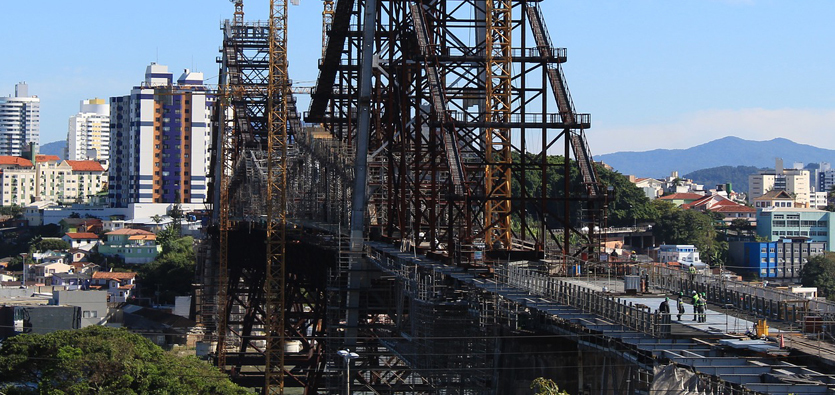
GFRP materials have shown incredible potential for use in civil engineering applications due to their attractive properties. The application of GFRP rebar in the renewal of existing RC structures such as buildings, bridges, roads bridges, roads, etc. can help the construction industry build long-lasting buildings in corrosive environments. Low maintenance and lifecycle costs, low installation cost, and tailorable performance properties are encouraging the civil engineering community to increase the use of advanced composite materials for new and rehabilitation applications.

Related: Durability of GFRP Reinforcement: Field Studies

The civil structures reinforced with GFRP rebar are likely to have a service life in excess of 100 years. Most importantly, GFRP reinforcement requires very minimal maintenance to reach the expected service life. Some situations where GFRP materials can be used to repair or rehabilitate a concrete member include structural degradation, increased live and dead loads, architectural malpractices, change in load path, and the need to comply with modern design practices.

Concrete corrosion is a common phenomenon which causes structural degradation, especially when a structure has to withstand an aggressive environment. The initial cost of implementing GFRP reinforcement can be high. Nevertheless, the speed of construction, reduced labor costs, and low maintenance offset the initial high cost. Lightweight reinforcement makes it easy for civil engineers to complete a rehabilitation project quickly without causing major traffic disruptions. In other words, rehabilitation of deteriorated concrete members with GFRP significantly lowers the indirect cost.

If you are looking for concrete reinforcement which sustainably extends the service life of deficient structures with minimum disruption to users, select GFRP fiberglass rebar for your next project. TUF-BAR manufactures and sells the finest quality GFRP products designed for both rehabilitation and new projects. Contact us for more information!

A Short Review On The Development Of GFRP Composites

A Short Review On The Development Of GFRP Composites

The last two centuries have witnessed rapid growth in construction materials technology which enables structural engineers to achieve economy, safety, and functionality of structures built to meet public needs. GFRP reinforcement is the most advanced and innovative construction solution we have produced so far.

Composite materials are the combination of high strength, high stiffness fibers and lightweight, corrosion-resistant polymers. The mechanical properties of composites are superior to either of their constituents. These materials were initially developed in the 1960s to meet the performance challenges faced by the aerospace industry.

The composite materials designed with high-performance fibers were expensive. Serious efforts were made in the 1970s to lower the cost of composites while maintaining or improving the quality of the material. FRP manufacturers put great emphasis on cost reduction so that the construction industry could use these materials as a cost-effective alternative to traditional materials.

The continuously dropping cost of implementing composite materials and the need for rehabilitating or replacing structurally deficient concrete structures have been driving the construction industry to use composites for complex civil engineering applications.

Following the growth in research and growing use of composites in sensitive environments, the conservative infrastructure construction industry is now widely accepting composites as the material of the future. Pultrusion process is the manufacturing method used to produce high-quality GFRP reinforcement and other composite products of varying structural shapes and properties.

So far as highway infrastructure is concerned, various GFRP structural systems have been developed and implemented in many projects. New construction and rehabilitation of the existing structures with bridge decks are some of the common applications of GFRP reinforcement. Considering the need for rehabilitating structurally deficient structures, a considerable amount of attention has been given to bridge decks in the past few years.

As compared to traditional steel, GFRP materials offer inherent advantages in terms of corrosion-resistance and strength which is ideal for bridge rehabilitation applications. Lightweight bridge decks provide structural engineers with an opportunity to reduce dead load and carry out rapid replacement activities.

A large number of GFRP decks are already in service and several others are under development and installation process. The continuous development of application guidelines and design standards will further lead to a widespread use of these modern construction products.

It is difficult to ensure success when a new product is launched in a well-entrenched marketplace. However, GFRP reinforcement and other composite products have created their demand quickly due to their inherent properties and outstanding results.

About TUF-BAR

TUF-BAR works hard develop composite materials into sustainable construction materials. As a leading manufacturer of GFRP fiberglass rebar in North America, our objective is to enable the construction industry to build corrosion-free, durable, and cost-effective concrete structures. Contact us for more information!

Composite Materials For Civil Engineering Applications

Composite Materials For Civil Engineering Applications

While composite materials have been in existence for centuries, the incorporation of composite technology into the civil engineering world is over five decades old. The application of composites in the defense industry dates back to the early 1940’s. Several industries started using composites because of their high strength-to-weight ratio and resistance to corrosive elements and weather.

The construction industry has been struggling to develop materials that can withstand harsh environments and help build sustainable concrete members. Steel is a widely used concrete reinforcement material which, unfortunately, leads to early deterioration of structures. The introduction of composites into the construction world has given the industry an opportunity to build sustainable concrete infrastructure.

There are not a whole lot of choices when it comes to selecting construction materials. Composite materials such as GFRP fiberglass rebar is the latest technology which adequately addresses many structural issues such as premature deterioration of concrete and structural deficiencies. Traditional materials include steel, wood, and masonry. While some of these materials demonstrate composite properties, they offer limited strength, durability, stiffness, and resistance against corrosive elements. These factors differentiate composite materials from traditional materials.

The scope and applications of advanced composites such as glass fiber reinforced polymer (GFRP) reinforcement have grown significantly over the past few years. These materials have the potential to completely transform the way we construct bridges, rail LRT, mining and tunneling, retaining walls, and other sensitive waterside buildings.

GFRP composite materials are designed using two major constituents: reinforcing fibers and polymer matrix. The function of reinforcing fibers is to provide strength and stiffness, while the polymer matrix allows proper load transfer between the fibers and acts as a shield to protect the fibers from environmental elements. Vinylester or polyester resins can be used as a polymer matrix.

So far as the properties of GFRP composites are concerned, few of the most notable are corrosion-resistance, high strength, and lightweight. Composites are also anisotropic which means they have different strength properties in different directions. They can be tailored to meet the complex design requirements for both new and rehabilitation applications.

The civil engineering community started using composites in tandem with other traditional materials. For instance, GFRP reinforcing rebar has been used in lieu with traditional steel to strengthen a concrete structure.

As a proud manufacturer and seller of advanced composite construction products, TUF-BAR encourages the construction industry to replace the traditional materials with more sustainable and cost-effective composites. Browse through our site or contact us for more information!
GFRP Fiberglass Rebar: A Vision For The Future

GFRP Fiberglass Rebar: A Vision For The Future

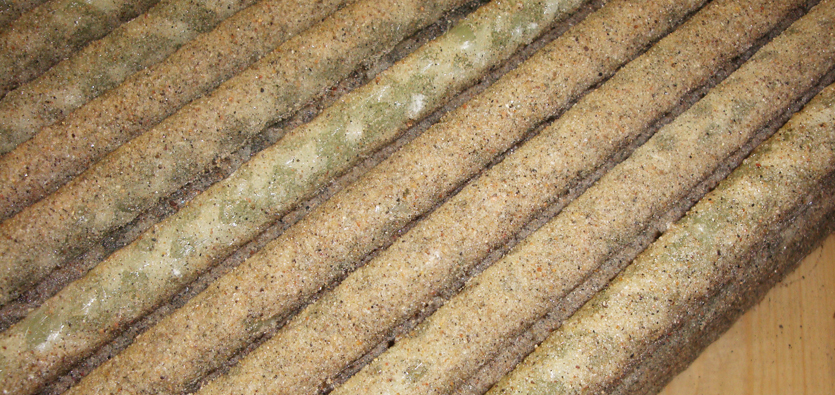
Although the strength of glass fiber-reinforced polymer (GFRP) was realized more than five decades ago, growth constraints such as limited practical data, high initial cost, and lack of design guidelines continued to limit their scope and applications as a long-lasting construction material. The civil engineering community, however, adopted advanced composite materials such as fiberglass rebar to resolve some of the longstanding structural problems such as corrosion of steel reinforcement, rapid concrete deterioration, and costly maintenance. Fiberglass manufacturers can now produce premium quality rebar following the development in manufacturing techniques.

It is useful to study various aspects of GFRP composites, including their mechanical properties and structural characteristics so that their applications in civil engineering can be clearly defined. Despite the constraints, GFRP rebar and other products are already being used as rust free, lightweight and high strength concrete reinforcement. The electromagnetic neutrality of GFRP materials makes them ideal for sensitive structural applications such as research laboratories, MRI units and educational institutes.

It is critical to ensure sustainability and environmental stability while selecting construction materials for various applications. There are a number of research papers and case studies which explored the viability of composites in building futuristic concrete infrastructure. According to most of the studies, the benefits of using GFRP composites, as compared with traditional materials, include extended lifespan without expensive maintenance. In addition, composite materials are advantageous in terms of environment. The overall compositions of GFRP fiberglass rebar can be customized depending on the unique requirements of a project.

The seismic retrofitting and rehabilitation of structurally deficient concrete structures using glass fiber-reinforced polymers are well-known techniques. The strength of externally bonded GFRP composites has demonstrated many advantages including the ease of installation and strength-to-weight ratio. The ease of installation and transportation without using heavy machines makes these materials economically viable for many waterside concrete applications.

The production methods for the production of GFRP composites have been revolutionized by sophisticated manufacturing techniques. These methods have enabled manufacturers to produce superior quality laminates with accurate fiber alignment and minimal voids.

Since the Industrial Revolution, the construction industry has been experiencing a lack of sustainable construction products. Before the introduction of composites, the construction industry was considered as labor intensive and technologically backward as compared with other industries. However, things have changed dramatically over the last three decades. Advanced materials and construction practices have played a key role in transforming the construction industry into a technology-driven industry. If you are looking for innovative concrete reinforcement for your next construction project, it’s important to consider GFRP technology which is designed to serve the future.

TUF-BAR is one of the most reputed GFRP fiberglass rebar manufacturers in North America. Our objective is to prepare the construction industry for the future and produce products that can meet emerging needs. Visit our website for more information!

GFRP Reinforcement For Bridge Decks

GFRP Reinforcement For Bridge Decks

In North America, glass fiber reinforced polymer (GFRP) composite materials have been in service, on public infrastructure facilities such as bridge decks, for over a decade. While the performance of GFRP-reinforced concrete structures has been excellent, advanced manufacturing technologies and promising characteristics of composite materials drive bridge producers and engineers to encourage the wider acceptance and use of these innovative construction materials.

Need for better infrastructure

Various bridge components, especially the deck of a bridge, are vulnerable to deterioration because they are subject to direct vehicular wheel loads and corrosive environments. There are thousands of bridges in North America which have poor deck conditions and need to be given due attention. Although, a deck failure doesn’t lead to an immediate tragic collapse, these bridges are safety risks to the traveling public.

Reinforced concrete is the de facto standard for bridge decks and more than 80% of bridges use concrete. Recognition of the disadvantages and deficiencies of traditional materials encourages the construction industry to explore the use of advanced materials such as GFRP fiberglass rebar.

Why choose GFRP reinforcement?

GFRP composite decks have inherent characteristics that make them ideal to build bridge infrastructure which lasts much longer. Here are some reasons why GFRP reinforcement should be increasingly used for civil engineering projects:

  • Low life cycle cost
  • Short construction time
  • Excellent corrosion resistance
  • Adaptable to new demands
  • Zero material degradation

GFRP decks are light modular systems which are strong enough for any legal load. Unlike steel bridge decks, composite decks are easy to install. As a corrosion-resistant material, GFRP fiberglass rebar is designed to achieve an extended service life of 100 years or more. The quality of a composite deck is better than that of a site-built deck because the former is designed in a factory environment where strict quality assurance criterion is applied.

Lightweight and durable GFRP decks can be used to rehabilitate structurally deficient bridges. If a steel-reinforced bridge has some section deteriorated due to corrosion, fiberglass rebar can be used to restore the lost strength.

Without maintenance, corrosion of steel reinforcement makes it impossible for a concrete structure to reach its expected service life. Rebuilding deteriorated structures has a significant environmental impact. GFRP reinforcement can help the construction industry reduce environmental impacts and build durable concrete structures.

Who we are

We are TUF-BAR, a leading producer and seller of high-quality GFRP fiberglass rebar in North America. Browse through our site to learn more about our composite products and their specifications!

Why Choose GFRP Fiberglass Rebar?

Fiberglass-Rebar

There is no denying the fact that glass fiber reinforced polymer (GFRP) technology offers many advantages over traditional materials such as aluminum and steel. One of the biggest benefits of composite construction products is long service life and reduced maintenance cost of ownership over the life cycle of a concrete structure. This blog post will provide a brief overview of the following major benefits of GFRP reinforcement:

Corrosion-free concrete structures

Fiberglass rebar is designed to withstand some of the toughest environments including industrial waste and sea water. It is certainly an economically viable choice for the construction industry considering the rising rehabilitation costs of steel-reinforced structures. Unlike steel, fiberglass rebar does not corrode and requires minimal maintenance to achieve long service life.

Concrete structures such as water treatment facilities and bridges are subject to perpetual environmental pressure. It is a challenge for engineers to build these structures with sustainable materials while remaining within budget. Fortunately, the continuous technological advancements, long-term strength and cost-effectiveness make fiberglass rebar an ideal choice for critical civil engineering applications.

Low transportation and installation costs

Fiberglass rebar is an inherently lightweight construction material which does not require heavy equipment during the transportation or installation process. These characteristics of being lightweight material enables project management teams to save time and money. Quick delivery of project materials puts less burden on the public. For example, a deteriorated bridge can be rehabilitated with GFRP in a time-efficient manner. When compared to traditional steel, fiberglass rebar is ¼ the weight of steel and delivers 2x tensile strength.

Zero maintenance

Billions of dollars are spent every year to maintain existing, structurally deficient concrete structures. More than 55,000 bridges in the US are structurally deficient and in need of repair or replacement. The major reason why these structures have deteriorated before reaching their expected service life is the corrosion of steel reinforcement. GFRP-reinforced structures do not require maintenance or any major rehabilitation activity. The widespread use of GFRP reinforcement can save the world billions of dollars every year.

Electromagnetic neutrality

The non-magnetic properties of fiberglass rebar make the material ideal for many sensitive applications such as research, medical and IT facilities.

Traditional reinforced concrete is used in the construction industry largely due to low initial cost and vast experience of its use in practice. However, we need to implement innovative construction materials such as fiberglass rebar in order to build more sustainable and cost-effective concrete infrastructure.

TUF-BAR is one of the leading GFRP fiberglass rebar manufacturers in North America. We produce the highest quality fiberglass rebar, a lighter and stronger alternative to traditional steel rebar. Visit our site for more information!