Blog

How GFRP Can Help Strengthen Canada’s Infrastructure

How GFRP Can Help Strengthen Canada’s Infrastructure

Over the last few years, investment in infrastructure in Canada has considerably increased. Municipalities, provinces, and territories own the majority of public infrastructure which includes bridges, roads, wastewater systems, sports areas, transit systems, and recreation infrastructure. According to Infrastructure Canada 2016, municipal governments own 59.8% while provinces and territories own 38% of public infrastructure.

The federal government has also increased its spending on core public infrastructure over the last decade. These investments are valuable when it comes to minimizing the infrastructure gap and addressing emerging challenges.

Despite the rise in investment in the public infrastructure sector, Canada still needs a long-term strategy to improve the quality, accessibility, and, most importantly, the sustainability of services Canadians use every day. Lack of innovation and willingness to implement new technologies make it difficult for governments to maintain and build long-lasting, maintenance-free structures. The significance of effective, well-designed, and durable infrastructure cannot be undermined.

One of the challenges for all orders of governments is to assess the extent of the infrastructure gap, and how much needs to be invested. The lack of innovation in infrastructure development and the precise data on state and performance of existing structures is hindering economic development. A major portion of funds is invested in the rehabilitation of deteriorated and inefficient structures. The heavy maintenance costs can be dramatically decreased if the construction industry starts implementing materials like GFRP reinforcement and other advanced composite materials.

Importance of concrete infrastructure

Infrastructure refers to the basic systems and facilities required for a nation to function and grow. The quality of infrastructure and how effectively it serves its users greatly impact the economic growth of communities. A country cannot achieve ultimate economic growth if the capacity of its public infrastructure is unable to deal with emerging economic and social challenges.

Railways and roads play a decisive role in accelerating activities and facilitating the flow of people and goods. From telecommunications to transportation, concrete infrastructure helps Canadians adequately accomplish their daily activities. Secure sewage treatment and water supply allow Canadians to enjoy a clean environment and drinking water.

How to strengthen and extend the lifespan of concrete infrastructure

Advanced composites such as GFRP rebar provide governments with a strong and promising alternative to traditional materials. To achieve sustainable concrete infrastructure, it’s inevitable to encourage the widespread use of advanced composites in civil engineering. GFRP reinforcement products can be used both in new and rehabilitation applications. Low maintenance, high tensile strength, lightweight, corrosion resistance, and ease of installation are some of the major characteristics of GFRP construction products.

About TUF-BAR

TUF-BAR manufactures and sells GFRP products in Canada and across North America. We produce the highest-quality concrete reinforcement products which effectively address the shortcomings of traditional steel. Visit our website for more information!
Canada’s Infrastructure: Opportunities And Challenges

Canada’s Infrastructure: Opportunities And Challenges

The Canadian government encourages and supports the maintenance and development of infrastructure to ensure the citizens have what they need to grow and flourish as a community. Structures like bridges, wastewater facilities and roads are absolutely essential to economic growth and human health. Communication and transportation networks can have a dramatic impact on the economic growth in the region.

However, the infrastructure gap and its impacts are strongly felt by Canadian communities as they put efforts to face economic, environmental, and societal challenges. These challenges are felt more by some segments of society than others. Extreme weather, climate change, and rapid deterioration of concrete threaten existing infrastructure across the country. These factors have an alarming impact on the lifespan, maintenance, cost, and rehabilitation of infrastructure.

In 2013, floods in Alberta destroyed approximately 1000 kilometer of roads and damaged hundreds of bridges. Coastal regions are more vulnerable to the effects of natural disasters, corrosive environment, and rising temperatures.

Economic growth depends on efficient infrastructure

The most critical challenges Canada and the United States face today is the steady deterioration of public infrastructure: sewers, bridges, roads, waterside structures, etc. Governments have to deal with the heavy annual maintenance costs annually just to maintain the existing structures. Bridge delays and thousands of Canadians stuck in their vehicles due to traffic congestion are the areas where innovation and investment can improve productivity and quality of life.

Need for sustainability and foresightedness

Canada needs a long-term and strategic infrastructure investment strategy to develop sustainable and economically viable infrastructure. Since efficient and long-lasting infrastructure is core to economic competitiveness, it’s impossible to achieve sustainable growth without investment and implementing innovative construction strategies.

Unfortunately, public investment in infrastructure couldn’t keep up with our economic and infrastructural needs. For instance, the transportation infrastructure in major Canadian cities can hardly meet pubic demands. The service life of highway structure is only four to five decades which is alarmingly low. A large percentage of public structures either require heavy maintenance or they need to be completely replaced. While the government has to spend billions of dollars in order to upgrade and maintain existing structures, lack of innovation and sustainable construction materials is contributing to this decay.

Opportunities

There is a dire need to develop and implement advanced construction materials to build concrete infrastructure that can last for at least a century with low maintenance. Advanced composite materials like glass fiber-reinforced polymer (GFRP) can help the government replace outdated traditional materials and resolve these longstanding structural issues. For example, GFRP fiberglass rebar is a promising alternative to traditional steel. The government should encourage the construction industry to adopt these advanced products and focus on long-term strategies.

About us

TUF-BAR works hard to develop and manufacture sustainable construction products while focusing on safety, durability, and the environment. Browse through our site to learn how our products can solve a number of complex and longstanding structural problems like deterioration, lack of strength, heavy maintenance costs and short life span!

Extending The Durability Of Reinforced Concrete In Harsh Environment

Extending The Durability Of Reinforced Concrete In Harsh Environment

Considering the current aging concrete infrastructure in North America, the concrete industry is dealing with two challenging tasks. First, how to design and build new reinforced concrete (RC) structures that will maintain their integrity and usefulness during their expected service life with minimum repair and maintenance. Second, how to restore or extend the useful life of existing structurally deficient structures. Deteriorated structures require heavy maintenance to continue to remain operational and safe.

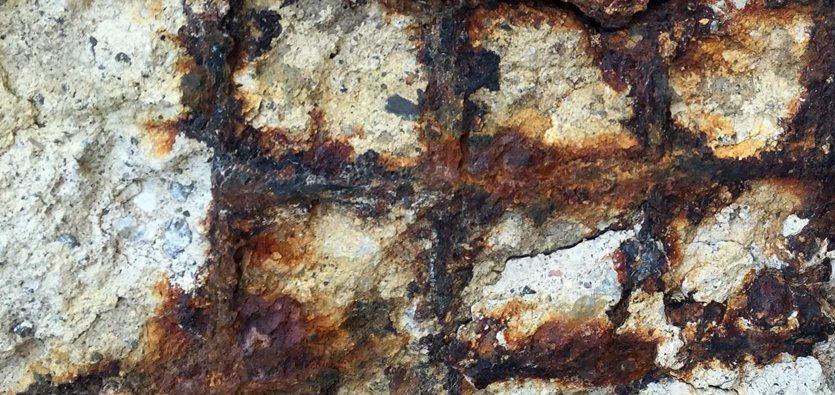
The remaining useful life of a structure is calculated based on its current rate of distress or deterioration while assuming continued exposure. Chloride attack is one of the most prominent elements when it comes to investigating the durability of RC structures in marine and highways or other harsh environments. Chloride attacks cause and accelerate corrosion of steel reinforcing bars causing spalling and cracking or even complete structural failure.

It’s common in the construction industry to delay maintenance activities until the situation becomes worse. There are thousands of structurally deficient and unsafe bridges in the US and Canada waiting for rehabilitation. However, well-informed bridge owners understand the importance of sustainable and timely rehabilitation.

No matter how well-designed or constructed a concrete structure is, it requires regular maintenance. However, the latest concrete reinforcement technologies such as GFRP reinforcement decreases the need for perpetual maintenance and repair. Advanced composites like glass fiber-reinforced polymer (GFRP) are corrosion-resistant and they can provide concrete with protection against corrosion.

In North America, corrosion of embedded metal in concrete is the primary cause of deterioration in RC structures such as bridges and public structures. Most of the existing concrete structures in North America were reinforced with traditional materials like steel. These structures have to go through year-round exposure to de-icing salts, the corrosive impact of acid rain, and freeze-thaw cycles. Poor construction practices is also a major reason why the importance of rehabilitation has increased.

While marine structures are subject to constant exposure to chlorides, highway structures have to go through de-icing salts during the winter. It becomes critical to identify and treat low concrete cover in order to maintain the strength of a highway structure. The lack of protection or maintenance will lead to premature depassivation of the steel reinforcement. Inadequate concrete cover accelerates the impact of chlorides ingress.

Extending durability of RC structures with GFRP reinforcement

GFRP construction products are completely reshaping the way the civil engineering community designs and rehabilitates concrete structures. As a lightweight, corrosion-free, and high strength construction solution, GFRP enables the construction industry to build durable highway structures, rail LRT, medical and IT facilities, buildings and more.

TUF-BAR is one of the most trusted GFRP manufacturers and sellers in North America. Our objective is to help the construction industry permanently eliminate structural issues like steel corrosion, heavy maintenance, and labor-intensive construction processes. Browse through our site to learn more about our GFRP products and their specifications!

Chloride-Induced Steel Corrosion And Solutions

Chloride-Induced Steel Corrosion And Solutions

Sustainability is one of the prime focuses of attention in the concrete industry in North America. From creating concrete structures with a low environmental impact and adaptation of the building process to longer life of concrete structures, it’s important for the construction industry to build sustainable RC structures.

Regardless of the region or climate, reinforced concrete structures built with traditional materials deteriorates due to chloride attacks and other phenomena. The primary action of chlorides is to corrode steel reinforcement.

Corrosion is one of the major problems that affects the durability of reinforced concrete structures. Both chloride-induced and carbonation-induced corrosion are common phenomena in civil infrastructure across the globe. Billions of dollars are spent just to maintain steel-reinforced structures and to slow down the corrosion process. The spalling and cracking in concrete due to corrosion and the reduction in the cross-sectional area of reinforcing bars lead to structural deficiencies.

Chloride-induced corrosion of steel

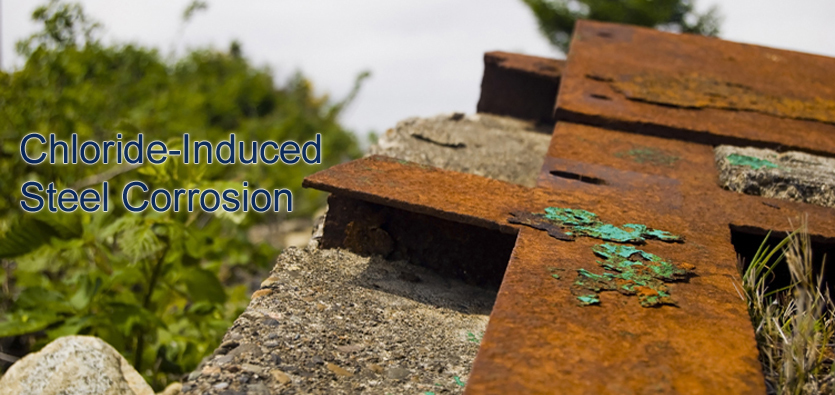
Corrosion of steel reinforcement has been one the most pressing durability issues in RC design. Depassivation of the protective thin oxide film of the reinforcing bars and chloride ingression initiate corrosion. Corrosion of reinforcement not only degrades the appearance of a structure but also reduces its safety and strength. In waterside structures where concrete has to encounter a high concentration of chloride, it becomes critical to implement long-lasting materials. When it comes to environmental deterioration of RC structures, chloride-induced corrosion is a major concern.

RC is a widely used building material. It is cost-effective, versatile, and easily available. If designed and executed properly, concrete allows a variety of applications and forms. However, the penetration of chloride ions, carbon dioxide, or sulphate into RC leads to rapid degradation. As mentioned earlier, the corrosion of the embedded steel is the main reason why RC structures deteriorate.

The service life of RC structures can be divided into two parts: propagation and initiation. Initiation is described as the time until depassivation of steel is detected. It’s important to have knowledge of chloride ingress rate and the critical condition for depassivation design initiation phase. The propagation period requires knowledge of the corrosion rate in order to predict structural integrity.

GFRP fiberglass rebar: a reliable solution to chloride-induced corrosion

Advanced composite materials like glass fiber-reinforced polymer (GFRP) reinforcing bars are corrosion-free materials that provide a durable solution to chloride-induced and other forms of corrosion that rapidly degrade the strength of a concrete structure. As an inherently corrosion-resistant material, GFRP rebar makes it possible to build RC structures that can achieve a long service life while requiring very minimal maintenance.

In Canada and the United States, the construction industry is now realizing the need for GFRP and other composite materials that provide sustainable and cost-effective construction solutions. TUF-BAR is a leading fiberglass rebar manufacturer in Canada and across North America. We manufacture and sell a range of GFRP construction products including rock bolts, dowels, and fencing panels. Contact us to learn more about our products.

Reinforced Concrete (RC) Structures: How To Encounter Steel Corrosion

Reinforced Concrete (RC) Structures: How To Encounter Steel Corrosion

Reinforced concrete structures go through a number of changes and actions throughout their lifespan. These changes or actions can be the reason why concrete structures deteriorate. Higher traffic volumes, increased population growth, heavier vehicles, structural modifications, lack of maintenance and corrosion resistance strategies, and construction practices are some of the factors that lead to deterioration and premature failure of RC structures.

In order to increase structural capacity due to increased loads or to reinstate structural capacity as a result of deterioration, existing structures are rehabilitated. As the demand for safe, durable, maintenance-free, and strengthen concrete structures is on the rise, many innovative materials like glass fiber reinforced polymer (GFRP) have been introduced. GFRP or other composite materials are an excellent alternative to traditional strengthening materials like steel, especially when it comes to rehabilitation or constructing concrete structures in harsh environments.

Reinforced concrete has been a major structural material for more than a century. It is still a very popular and widely used material for public structures all across the globe. When civil engineers started using reinforced concrete, it was believed that RC structures were durable enough to last or maintain their integrity and strength for decades. However, corrosion of steel reinforcement seriously damaged the durability and strength of concrete.

Corrosion of steel reinforcement

Researchers have developed a number of technologies to address the problem of steel corrosion; for example, stainless or galvanized steel. Cathodic protection is another technique where the structure is connected to a rust-inhibiting electric current.

Treating concrete with a rust-inhibiting compound is another technology that is supposed to eliminate corrosion. Unfortunately, none of these techniques can permanently resolve steel corrosion inside the concrete. This is the reason why thousands of concrete structures, especially bridges, in North America have become structurally deficient.

Development of non-corrosive construction materials

Taking into account the widespread corrosion of steel reinforcement and structural deficiency, serious efforts were made in the second half of the 20th Century to develop non corrosive and non-metallic reinforcement for civil engineering applications. Highly durable, lightweight, and corrosion-free GFRP fiberglass rebar was developed as an effort to get rid of the disadvantages associated with steel and other traditional materials.

The civil engineering community now acknowledges the many advantages of applying GFRP bars and other fiberglass products. Corrosion-resistance, lightweight, and electromagnetic neutrality are some of the notable features of fiberglass rebar.

In order for the construction industry to permanently resolve RC deterioration due to corrosion, they should replace traditional materials with GFRP. It’s time to build sustainable RC structures that can easily achieve a lifespan of 100 years without requiring heavy maintenance.

About TUF-BAR

TUF-BAR is a leading name in North America when it comes to GFRP fiberglass and advanced composites. We manufacture and sell the highest-quality GFRP rebar and other composite products to help nations build safe and sustainable concrete infrastructure. Visit our website for more information.

Chloride-Induced Corrosion Of Steel Reinforcement: An Overview

Chloride-Induced Corrosion Of Steel Reinforcement

The corrosion of reinforcing steel has received considerable attention over the last few years. The high cost of repairing rapidly deteriorating concrete structures and the worldwide impact of corrosion on concrete infrastructure are some of the main reasons why corrosion of metals is gaining increasing attention. The corrosion of steel reinforcement was first observed in chemical manufacturing plants and marine structures. Waterside structures are subject to harsh environments where it becomes difficult to slow down the corrosion process.

Most structurally deficient parking structures and bridge decks are common examples of how chloride-induced corrosion can seriously damage the integrity of a structure and shorten the lifespan. Researchers have put extensive efforts into understanding the mechanics of steel corrosion. While many techniques have been introduced to control steel corrosion, there is a dire need for sustainable structures that can achieve a lifespan of more than 100 years without requiring expensive maintenance and rehabilitation.

What is chloride-induced reinforcement corrosion?

Chloride ions can be originated from the surrounding environment or from the use of contaminated mix constituents. Chlorides enter the pore system through the concrete surface. Chloride ions are common in nature; concrete materials normally contain a very small amount of chloride ions.

Dissolved chloride ions can penetrate concrete in structures exposed to deicing salts or waterside environments. How fast the corrosion of steel reinforcement embedded in concrete damages a structure depends on various environmental factors.

Economic impact of corrosion

A large number of reinforced concrete (RC) structures have been built with concrete and steel over the last several decades. The deterioration of RC structures directly impacts everyday life in terms of sustainability, safety, and economy. Heavy resources are allocated every year in Canada and across North America just to repair or rehabilitate the existing structures rather than constructing new ones. This is leading to an increasing burden on taxpayers.

Chloride-induced reinforcement corrosion is a major durability problem in North America as a large number of RC structures have been affected by reinforcement corrosion, especially marine structures such as sea walls, water treatment facilities, and bridges. Chloride-induced corrosion is one of the prominent features of waterside environments. Construction materials with strong corrosion-resistance properties are needed to encounter the initiation and propagation of reinforcement corrosion that results in spalling, cracking, and loss of load-bearing capacity.

How to deal with the corrosion of concrete reinforcement

It’s critical for us to implement long-lasting and cost-effective construction solutions to effectively address corrosion and other structural challenges. Glass fiber-reinforced polymer (GFRP) construction materials are inherently corrosion-free, lightweight, and superior in strength. Composite materials like GFRP fiberglass rebar adequately address corrosion-related problems in concrete infrastructure.

If you want your next project to be completely corrosion-free and durable, use GFRP reinforcement. TUF-BAR manufactures world-class GFRP construction products such as fiberglass rebar, fencing panels, dowels, rock bolts, form ties, and more. Visit our website or contact us for more information!