Blog

Strengthening And Rehabilitation Applications of GFRP Rebar

Rehabilitation-Applications-of-GFRP-Rebar

Following the introduction of fiber reinforced polymers (FRP) into civil engineering in the 1970s, glass fibers were used in the polyester matrix to produce corrosion-free reinforcement bars. There were several concerns related to the lack of knowledge of in-service properties of composite construction materials.

Many research programs were carried out in order to determine the true potential of GFRP materials and their applicability as a sustainable rehabilitation material. The development of new codes and the availability of in practice data have broadened the scope and applications of GFRP reinforcement. Following are some of the rehabilitation applications of glass fiber-reinforced polymer (GFRP) reinforcement:

External reinforcement of reinforced concrete (RC)

The maintenance and upgradation of deteriorated structures have become one of the major concerns for civil engineers worldwide. It is economically viable to rehabilitate a concrete structure than to rebuild a new one. GFRP reinforcement is being used worldwide to rehabilitate structurally deficient structures like highway bridges, seawalls, buildings, and other concrete members. There are a number of rehabilitation methods that structural engineers employ to upgrade a concrete structure with GFRP rebar.

Internal reinforcement

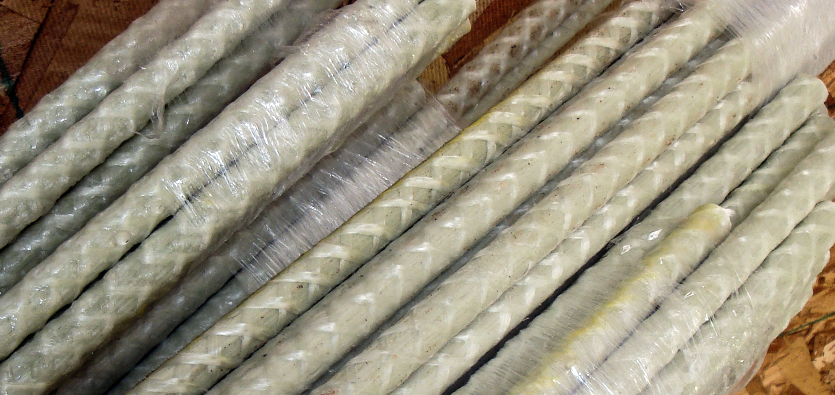
As internal reinforcement, GFRP bars are manufactured using a method called pultrusion. It is important to produce composite bars using fibers in order to develop excellent bond characteristics between bars and concrete.

Glass fiber reinforced polymer (GFRP) reinforcement is emerging as a practical solution to eliminate the corrosion problem of steel reinforcements in concrete structures. Unique characteristics and long-term durability of GFRP bars is crucial to extending its application especially in structures subject to aggressive environments.

GFRP rebar is tested to be the most effective material for the confinement of concrete columns. Advantages of concrete confinement with GFRP composites include:

  • Composite materials can be applied in confinement process with great ease.
  • Fiberglass bars are non-corrosive when exposed to a number of environmental elements.
  • They are magnetically transparent and do not interrupt electromagnetic fields.

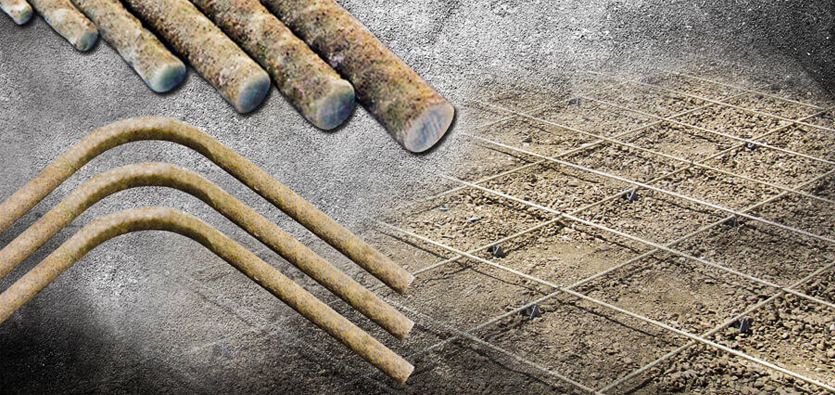
Unlike steel reinforcing bars, GFRP rebar cannot be reshaped once they are manufactured. Various bends can only be produced during the manufacturing process. When it comes to the cost and durability, fiberglass composites turn out to be an ideal rehabilitation material which can be used in severe environmental conditions. This is the reason why fiberglass bars are being widely used for building new structures and rehabilitating the existing ones.

Why TUF-BAR

TUF-BAR is a leading manufacturer and seller of the highest-quality fiberglass rebar in North America. Our GFRP rebar is an incredible construction material which provides numerous advantages when used in new projects or rehabilitation activities. Visit our site to learn more about our sustainable construction products.
Floating Structures And Performance of GFRP Composites

Floating-Structures

The mega-float bodies are designed to serve as platforms for infrastructures such as airports, port facilities, petroleum and LNG storage facilities, sports and leisure complexes, bridge piers, etc. Oceans are of great importance since the human activities are expanding into oceanic regions. The floating structures will be important means of ocean development. However, the rehabilitation cost of marine structures has reached an unprecedented level.

The use of marine environment for human life due to its positive effects on lifestyle has created opportunities for offshore construction. However, building maintenance-free concrete structures that could remain in service for at least 100 years has been critical to sustainable economic growth. From the life-cycle standpoint, there is an urgent need to explore, develop, and implement corrosion-free technologies.

Since the floating structures, whether large or small, are constructed in an aquatic environment where structural deterioration and corrosion of traditional reinforcement are likely to develop prematurely, structural engineers have to use high-quality materials that can resist corrosive elements and maintain the overall integrity of a structure. The application of GFRP reinforcement can help construction industry build corrosion-free and sustainable floating structures.

In order to evaluate the performance of composite materials, various studies have been conducted to examine concrete-FRP bond strength and to investigate whether or not composite materials (FRP) are better than steel and other conventional materials. A number of tests have been conducted to study the bond strength of ordinary steel as compared to GFRP rebar. Durability testing of GFRP rebar has been conducted by various universities and research centers throughout the world, studying GFRP reinforcement for a large variety of different environments and evaluation conditions. Most of the studies present a preliminary experimental study highlighting some of the hidden potentials of GFRP reinforcement.

A considerable number of durability and performance tests reveal that the structures reinforced with GFRP rebar have superior resistance against corrosion and that they are highly likely to achieve long service life without costly maintenance and repair. GFRP rebar is an ideal material for building long-lasting and cost-effective waterside structures.

The existing RC floating infrastructure is subject to specific environmental conditions which make it impossible for concrete structures to reach their expected service life without repair, periodic repainting, and rehabilitation. Following the expensive repair and rehabilitation activities, engineers struggle to eliminate or reduce corrosion of steel reinforcement caused by corrosive seawater.

Corrosion of reinforcing steel has been the leading cause of deterioration of concrete infrastructure which leads to multi-million annual rehabilitation costs around the world. The advantageous properties of GFRP rebar such as high tensile strength, corrosion-resistance, electromagnetic neutrality, and ease of installation have led to an increasing interest in GFRP

About TUF-BAR

At TUF-BAR, we manufacture and sell supreme quality GFRP rebar and accessories that can extend the service life of marine structures up to 100 years. Being a member of Canada Green Building Council, we produce environment-friendly construction products such as fiberglass rebar by using the highest quality corrosion-resistance vinylester resin and fiberglass materials that are in compliance with CSA and ACI codes. Feel free to discuss your project with us!

Properties of GFRP Rebar After Long-Term Exposure to Corrosive Environments

Concrete-Bridge

It is essential to carry out accelerated degradation tests on glass fiber reinforced polymer (GFRP) to determine its ability to remain stable under long-term exposure to chemicals, chlorides and other corrosive elements. Researchers have already conducted a number of tests to study the durability of composite materials in harsh environments. The results reveal that GFRP rebar exposed to corrosive elements exhibited negligible reductions in mechanical properties with time. It is because of the promising results that the construction industry is now increasingly using composite materials for new and rehabilitation applications.

Durability testing of GFRP rebar has been conducted by a number of universities and research centers all around the world, covering a range of different environments and evaluation conditions. Testing in-practice construction materials is a complex task that requires advanced tools and skills. It was difficult to study surface degradation through SEM analysis. However, many studies have been performed over the past few years to test GFRP reinforcement in saltwater and acidic environments. Since the durability properties of GFRP bars are not affected by exposure to degradation environments, it is established that GFRP reinforcement is ideal for applications where corrosion is a prime concern.

The tensile strength of the fiberglass rebar exposed to an acidic environment does not decrease as the exposure time increases. Some studies show that the strength decreased was too small to influence its mechanical properties. Fiberglass rebar is applied as a concrete reinforcement mainly when a concern exists regarding the inability of steel and other traditional reinforcement materials to resist corrosion. Properties of being salt-resistance and mechanically superior indicate that GFRP bars should be used as a permanent steel replacement.

Corrosion of internal reinforcing steel is considered as the major factor behind the failure of concrete structures. Reinforcement corrosion leads to cracks in concrete that makes it easy for chlorides to penetrate and reach the steel to begin oxidizing. As a corrosion-free material, fiberglass rebar is a practical and economically viable solution that give structures a long service life. The availability of thorough design guides, specification and qualification procedures, manufacturing techniques, and construction standards make it practical for builders and contractors to safely and commercially implement GFRP rebar in a range of civil applications.

TUF-BAR is one of the world’s leading companies when it comes to manufacturing and selling the highest quality GFRP rebar. You can discuss with us the environments in which you are planning to use fiberglass rebar. We will be happy to assist you on how GFRP fiberglass rebar can be used as concrete reinforcement to fight deterioration and minimize maintenance costs. Visit our site to know more about our GFRP products and their specifications. Feel free to call us if you have any question.

GFRP Rebar: A Dependable Solution To Concrete Deterioration

GFRP Rebar

The inability of traditional materials to permanently resolve issues related to concrete deterioration is probably the biggest reason why structural engineers and researchers have been trying to develop materials that can meet the structural needs of our times. Conventional construction materials; for example, steel, cannot sufficiently address concerns associated with rapidly growing concrete deterioration.

GFRP fiberglass rebar is one of the most developed types of composite materials that can be used in various civil engineering applications. GFRP reinforcement is being accepted widely due to its favorable properties: high strength-to-weight ratio, electromagnetic neutrality, corrosion-resistance, and ease of installation.

In-practice data and research conducted to date have shown numerous advantages of implementing GFRP as a concrete reinforcement. However, there are still a considerable number of implementation, design and technical issues that need to be resolved prior to broader use of FRP composites as an alternative to traditional materials.

Over the last few years, the use of advanced composites has gained worldwide popularity because of the rising need to build sustainable concrete structures and rehabilitate the existing structurally deficient concrete structures. The developed countries are now putting heavy emphasis on the use of sustainable structural designs, and improving the performance of existing structures.

FRP composites are increasingly being considered as an enhancement to and substitute for infrastructure systems that are reinforced with traditional construction materials. As mentioned earlier, fiberglass rebar is a lightweight and corrosion-resistant material that can be customized in accordance with nature of a project. Because of these favorable characteristics, GFRP composites are selected for both new and rehabilitation projects. They are also used as an external reinforcement for strengthening and seismic retrofitting.

While the mechanical advantages of using FRP composite are clearly explained in literary works, the construction industry should keep exploring composite materials as a potential solution to contemporary structural challenges.

Waterside concrete members are constantly exposed to the harsh and corrosive environment that can deteriorate steel reinforcement quickly and shorten the lifespan of a project. Being a durable solution to environment-related issues, GFRP reinforcement can be utilized for a diverse range of applications.

Composite materials were initially developed for aerospace, automotive, industrial, electrical, military, recreational, and marine industries. While research-based content is widely available regarding the improved performance of concrete members reinforced with composites, the fiberglass rebar industry should investigate and eliminate all the factors that hinder the growth of composites as modern construction materials. The ongoing research to further explore the true capabilities of advanced composites will pave the way for widespread adoption of GFRP composite materials.

The construction industry has to consider many factors: environmental factors, resource consumption, financial constraints, social factors, and project requirements before selecting materials for sensitive projects. GFRP fiberglass rebar is developed while considering all these factors.

TUF-BAR has been developing, manufacturing, and selling superior quality GFRP fiberglass rebar and accessories in North America for many years. Our construction products are designed to build and support a sustainable concrete infrastructure with minimum maintenance costs. Feel free to discuss your project!

General Characteristics of GFRP Fiberglass Rebar

General-Characteristics-of-GFRP-Fiberglass-Rebar.jpg

Glass fiber reinforced polymer (GFRP) rebar is made of continuous glass fibers embedded in a polymeric resin matrix and additives. Composite materials are developed for use in many structural applications with the major advantages of being a lightweight and corrosion-free alternative to steel reinforcement. Besides, GFRP rebar offers high tensile strength, stiffness-to-weight ratio, solid resistance to corrosive chemicals, electromagnetic neutrality, excellent fatigue properties, and control over thermal expansion.

GFRP construction materials were developed to address various concrete deterioration issues that traditional steel could not address. Because of the non-corrosive nature of fiberglass bars, they have been regarded by the civil engineering community as a promising alternative to steel reinforcement in concrete infrastructure. Traditional steel is not ideal for environments where chemical attacks and deterioration are major concerns.

Chloride-induced reinforcement corrosion has been the major cause of deterioration in concrete. When steel reinforcement corrodes, the rust starts occupying a greater volume than the reinforcement which ultimately leads to cracking, spalling, and delamination. Tensile stresses induce enough pressure to disrupt the cement paste. We understand how much we invest in repairing or maintaining structurally deficient structures.

Transportation agencies, for instance, have to deal with the challenge to keep bridge infrastructure in good shape despite limited funds. Bridge structures in Canada and the United States are deteriorating at an alarming rate, and rehabilitation costs are rising continuously. The retrofitting of existing concrete members to resolve deterioration related problems has traditionally been done using traditional techniques and materials. It is recommended that construction agencies should start exploring and using GFRP reinforcement in rehabilitation and new applications.

If we are truly determined to build sustainable concrete infrastructure, we need to address issues related to deterioration and corrosion in order to make concrete perform better. It might be not possible at the moment to completely eliminate concrete deterioration, but it is possible to significantly extend the service life of concrete structures with proven GFRP rebar which is available in North America and other parts of the world. The wider use of fiberglass rebar can really help construction agencies and governments dramatically minimize the maintenance costs and put less burden on taxpayers.

Researchers have been continuously working on finding the true potential of composites by testing the FRP-reinforced structures. The objective of ongoing research work is to provide the world with sustainable construction materials which can withstand harsh environments in a cost-effective manner.

The mechanical properties of GFRP fiberglass rebar differ from those of traditional reinforcement materials. To achieve better results, structural engineers should consult recommendations made in published construction and design guides prior to implementing fiberglass rebar in their project.

TUF-BAR is one of the leading producers and sellers of GFRP fiberglass rebar and accessories in North America. Our innovative construction materials are stronger and lighter alternative to steel bars. Our GFRP products are specified for use in concrete slabs, dams, marine structures, barrier walls, to name a few. Feel free to discuss your project with us!

Fire Endurance of FRP-Strengthened Concrete Structures

Fire-Endurance-of-FRP-Strengthened-Concrete-Structures

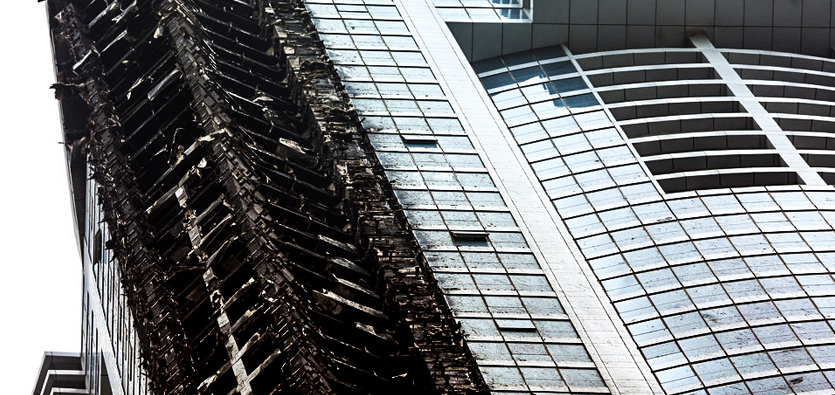
One of the properties of concrete over other construction materials is its inherent fire-resistive characteristics. However, structural engineers have to design concrete structures for fire effects. The rise in temperature can lead to decrease in structural strength and modulus of elasticity of concrete and reinforcement. Extremely high temperature causes expansion of structural components which leads to strains and stresses. A concrete structure has to maintain its integrity and withstand live and dead loads despite the rise in temperature. The provision of appropriate fire safety measures, therefore, becomes essential for structural members.

Fire is one of the severe environmental conditions that concrete structures might be subjected to. Fire resistance is generally defined as a duration during which a concrete structure exhibits resistance with respect to temperature transmission, structural integrity, and stability. The ability of a structure to handle fire largely depends on the materials used in construction, geometry of the member, load intensity, and the exposure of fire. Traditional construction materials, such as steel, do not provide concrete buildings with sufficient fire endurance.

The inability of traditional materials to address critical structural issues such as concrete deterioration, corrosion, and lack of fire endurance encouraged researchers and engineers to come up with better solutions. The development of composite materials for civil engineering applications is clearly a great achievement. Fiber reinforced polymer (FRP) is now being widely used for strengthening and rehabilitation applications. FRP composites have gained popularity because of the numerous advantages they offer over traditional materials.

The increasing use of FRP materials for structural rehabilitation has raised concerns regarding the behavior of composite materials in fire. However, a number of studies have been conducted over the past few years, exploring the endurance of FRP-reinforced concrete systems. For example, a study was recently carried out where a comparison was made between the fire performance of a traditional RC column and that of an FRP-strengthened RC column. The research concluded that satisfactory fire resistance ratings for FRP-reinforced concrete columns can be achieved by incorporating recommended measures into the overall structural system.

TUF-BAR is a reputable manufacturer and seller of GFRP fiberglass rebar and accessories including rock bolts, anchors, and form ties. Our focus is to develop modern and sustainable construction materials that can help construction industry build a long-lasting concrete infrastructure. Visit our site or give us a call to know more about our products!